
The Trojan Horse: 3 Lessons in Strategic Co-optation

My Sustainable Encounter with Rohan Dahotre
Broadcasting a Wilder Message
How can a leader with a mission-driven message reach an audience that is not already listening? The conventional approach of speaking to a converted base has its limits. To create widespread change, a message must enter the mainstream. This educational post deconstructs a powerful alternative strategy modeled by wildlife artist Rohan Dahotre. He practices a form of strategic co-optation, using global commercial platforms as a "Trojan Horse" to deliver his message of ecological awareness. His method involves embedding his worldview within the architecture of consumer culture, turning unexpected venues into classrooms. It raises a practical and provocative question for any leader in the sustainability sector. Is it possible that the most impactful advocacy happens not in dedicated forums, but in the places people gather, like coffee shops and luxury showrooms? Dahotre's work indicates that a well-placed piece of art can be the most effective infiltration.
Lesson 1: Prioritize Awareness Over Activism
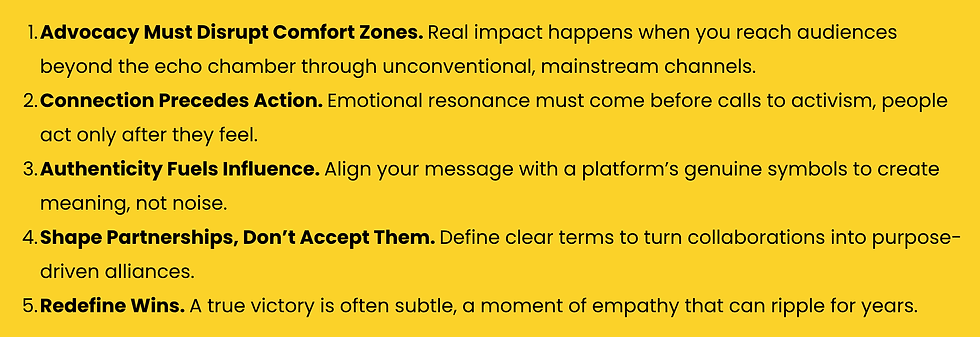
The first lesson in Dahotre's method is a radical reordering of priorities. He operates on the critical distinction between "awareness" and "conservation". A direct call to action like "save the tigers" can fail for a general audience if they lack a basic connection to the animal. You cannot ask people to protect something they do not recognize or value. The educational insight here is to reframe the initial goal. Instead of demanding immediate activism, the objective should be building foundational literacy and an emotional connection. His work for Starbucks is a perfect example. The brief focused on coffee-growing regions, which allowed him to introduce the local flora and fauna. A customer sees a beautiful mural of a tiger not as a lecture, but as an object of admiration. That moment plants the seed of awareness. The lesson: meet your audience where they are and build a bridge of understanding before you ask them to cross it.
Lesson 2: Find the Point of Authentic Intersection
A Trojan Horse is only effective if it looks like it belongs inside the city walls. The second lesson is that a co-opted message must feel authentic to the platform. It is not enough to simply place a wildlife image onto a commercial product. Dahotre’s method requires finding a point of “authentic intersection” between a brand’s existing identity and a deeper natural or cultural narrative. His Lamborghini project is such an example. He did not just add a bull. He connected the brand’s bull logo to the revered Nandi bull from Indian culture, linking the car’s core attributes of power and strength to the animal’s wisdom and mythological significance. The educational takeaway is strategic and clear. The most successful integrations find a symbol already present in the brand’s DNA and "liberate" it, infusing it with an ecological meaning that feels both surprising and inevitable. It is not a simple advertisement. It is a re-interpretation.
Lesson 3: Shape the Brief, Don't Just Fulfill It
The final lesson is one of agency. This strategy is to be active. Dahotre does not wait for a perfect, nature-themed brief to appear. He is explicit with his commercial clients, stating from the outset that he wants to "include wildlife in some form". This proactive engagement transforms the relationship from a simple transaction into a mission-aligned collaboration. The educational insight for any leader is the power of setting non-negotiable principles. By clearly stating your core mandate, you can guide potential partners toward projects that serve a dual purpose, satisfying their commercial goals while furthering your own. This turns a standard contract into an opportunity for authentic growth. Dahotre’s approach illustrates that you do not have to compromise your values to work with popular platforms, but you must have the strategic confidence to shape the terms of engagement from the beginning.

So what can we take from his approach?
Questions for Audience
Beyond art, what other "Trojan Horse" strategies can mission-driven leaders use to embed messages of sustainability into mainstream commercial culture?
Rohan Dahotre prioritizes "awareness" over direct "conservation" messaging with new audiences. Where do we draw the line? At what point does this subtle approach need to transition into a more direct call to action to be effective?


Comments