


The Genesis of a Sustainable Calling
What timeless principle underpins a 35-year career, proving that sustainability is an enduring blueprint for profit? Bijan Mishra's illustrious journey has been instrumental in shaping India's evolving sustainability landscape. His path began not with a predefined mission, but through immersion within diverse industrial segments, including mining, thermal power stations, renewables, and steel plants. During this tenure, he first realized sustainability would become "more than just work", evolving into a core identity. He observed that in a country like India, where "opportunities and learnings come every day", one could directly "correlate the output or the productivity with the sustainability". This correlation became fundamental, as he understood that sustainability "has to go in the long run".
From India's unique perspective, he recognized that "everything... is related to livelihood". This insight was pivotal: "When you are taking care of the livelihood of the things, then you have to take care of the nature as well". This established the linkage between "resource, productivity, livelihood, and the damage". His career initially involved researching the "health aspects of livestock" impacted by pollution from thermal power stations and various industrial activities. This early work, investigating emissions and their impact on the "life cycle impacting the bovines and comes to the human life chain", triggered a crucial thought. He questioned "whether these learnings could be transferred into understanding and implementing the different management techniques, plans, and technological innovations" within industries that significantly contributed to environmental degradation. This foundational research ultimately facilitated his shift from a specialized project to large-scale industry engagement.

"Sustainability has to go in the long run."

Navigating Global Standards:
Aligning Local Practices with
International Mandates
Modern industry operates within an increasingly intricate web of environmental and social guidelines, spanning regional, national, and global levels. Bijan Mishra's expertise lies precisely in helping companies navigate this complexity. He observes that international multilateral lending agencies provide comprehensive guidelines that are "more or less a better refinement of the existing regulatory requirements" of host countries. The fundamental challenge, then, becomes understanding how the "host country regulatory requirement" can effectively relate to these international agencies' demands. This necessitates a nuanced interpretation and strategic foresight, moving beyond compliance to genuine alignment with global best practices and evolving sustainability imperatives.
Bijan's core methodology involves creating a "comparative matrix between the local and international requirements" to "align them". He understands that achieving "100% alignment" is often impossible. In such scenarios, his team implements a tailored "management plan" structured with "key performance index as a key per result. Area here is with a budgetary provision". Companies adopt this plan with a "clear-cut vision" to implement local activities in a practice that ensures they "come up to par with the global need or requirement, or the guidelines". This systematic approach rigorously translates aspirational global standards into actionable, locally tailored practices, fostering live adoption and measurable progress.
This process, however, is "challenging", particularly due to the "budgetary provision which is getting affected by the production lines as well, and the business revenues". Bijan notes a common disconnect: "finance people” often prioritize short-term gains over long-term strategic value. Furthermore, anchoring sustainable structures against managerial shifts is difficult, as new leadership frequently questions established plans, asking "why do we need to spend?" or "Can we postpone it?". Yet, Bijan emphasizes that "everything is related to business perspective". Sustainable business practices necessitate addressing environmental, health, safety, social, and governance issues "at one go", with proactive leadership's unwavering commitment being paramount, as "governance comes from the top management".

"Key performance index as a key per result. The area here is with a budgetary provision."
Anchoring Resilience

"You never know what is going to happen tomorrow morning. It is very dicey."
Anchoring sustainable structures within organizations requires profound resilience, especially when confronted with inevitable managerial shifts. Bijan notes that it is "a very typical thing" for the thought process to change when "the management changes or the key position changes". New leadership frequently questions established plans, asking pertinent questions such as "Why do we need to spend?" or "Can we postpone it?". Bijan emphasizes the necessity of anticipating and addressing these concerns beforehand. This proactive approach ensures that environmental and social management plans, including those developed to stringent international standards, maintain their strategic priority amidst shifting organizational landscapes. Success hinges on a clear-cut vision that aligns with the new management's priorities from the outset.
Beyond managerial dynamics, modern sustainability also demands a robust approach to digital transformation. Bijan points out a common misunderstanding: many operations personnel believe "digitization is nothing but an Excel sheet". This misperception, he admits, "pains" him, as he has witnessed the profound transition from manual "drawing board" calculations to sophisticated software systems. He highlights the "painful" reality of conveying the speed and efficiency of digital tools. Even if a "windows diagram" can be generated in "2 min" by software, the underlying calculations and "prevalent wind direction" remain opaque to those focused purely on output. This gap in understanding hinders effective adoption.
Bijan's approach is to demonstrate digitalization's long-term strategic value beyond mere reporting. He shows companies how digitalizing sustainability practices contributes directly to their "long-term impact on Earth" and operational excellence. It enables benchmarking against peers, monitoring "energy consumption" patterns, and understanding real-time performance against design criteria. He stresses: "Do not consider it a recording in progress. You take it in the sense that I also want to excel in my business scenario." For Bijan, the essence of digitization in sustainability is its capacity to "enhance the business operational prospect", moving beyond PR. His experience indicates that once people comprehend how sustainability practices, enabled by digital tools, "make money for us," 99% of them agree with me.
Orchestrating Stakeholder Engagement: Trust in Conflict Zones
In the complex theatre of large-scale projects, particularly in "conflict zones like fragile Himalayas," effective stakeholder engagement demands a mastery of intricate negotiation. Bijan Mishra recounts an intense hydropower project that initially stalled, revealing "the intensity or the gravity" of its challenges. The project involved many stakeholders, from "local villagers to the government authorities, the policy makers, the permit license authority, and IFC," along with designers and the Judiciary Court. Villagers held "biased opinion[s] by their politically motivated thought process of losing livelihood," while policymakers debated project types and investors worried about their committed capital. It was "a chaos for almost one and a half years", even leading to a "legal battle in the court".
Bijan's approach to such profound discord is a testament to his unique capacity for orchestration. He navigated this multi-faceted conflict through persistent stakeholder engagement, tirelessly "fight[ing] a legal battle in the court" and convincing the judicial system of the project's necessity. The project, deemed "a requirement" to "support the grid system with a stable power of 200 megawatt," eventually gained judicial approval. The ultimate validation of his method arrived when the villagers, initially "stunned with the project", stated in the judicial system: "Yes, we want this project to happen, and this is going to enhance our livelihood and support the systems". This outcome, turning initial opposition into active support, embodies a core philosophical principle: genuine resolution emerges not from imposing solutions but from patient interpretation and alignment of seemingly irreconcilable interests, demonstrating how practical dialogue can bridge deep divides.
Building and maintaining trust with local communities over long project timeframes, particularly with villagers who may "think week to week or day to day," is a perpetual challenge. Bijan acknowledges the extreme volatility: "you never know what is going to happen tomorrow morning. It is very dicey." Agreements can shift overnight, with "someone else comes in or jumps into the scene and starts telling you or advising you." His method requires "a lot of patience to understand the exact need, and to stand on your feet that whatever you have told yesterday, it's still down now." This necessitates a dual approach: sometimes having "an iron face," at other times needing to "wear a soft heart with people." This intricate balance of firmness and empathy, adapted to site-specific realities, underpins his ability to sustain trust through protracted and unpredictable engagements, proving that consistent presence and patient interpretation are paramount for achieving long-term project viability and community buy-in.
Finally, Bijan's decades-long conviction is forged in the fires of these successes. He maintains the drive to persist where others might give up by drawing on four key insights: re-listening to the situation and recalling past successes; conducting global research on similar issues; understanding the limits of one's own operational framework; and maintaining an unwavering personal belief that "yes, this can be done". This blend of empirical learning, strategic self-awareness, and sheer conviction ("God is great, gives us courage") is what enables him to continually "do it again" despite the immense experienced difficulties.

"ESG is not copyrighted by any institute or any particular qualification. It is for all."
Industry Priorities & Universal Contribution

Bijan offers sharp insights into India's private sector priorities for sustainable transformation, drawing on his extensive experience in power, mining, and other industrial sectors. He highlights the imperative to optimize "mining machinery equipment" for maximum energy efficiency and to ensure that mineral extraction is both "technically as well as commercially... feasible without disturbing the strata surrounding". He firmly advises: "You should not do mining for the sake of mining." He emphasizes the critical importance of selecting machinery that offers "minimum energy consumption and maximum extraction of the things without disturbing the strata surrounding". This pragmatic approach extends to cost-benefit analysis, where a "surface miner" utilizing renewable energy demonstrates clear advantages over more environmentally hazardous methods like explosives, ultimately convincing operational teams that sustainable practices "also make money for us".
Beyond specific industries, Bijan offers a broader vision for future leaders in sustainability. He challenges the notion that ESG is a niche field, asserting that it is "not copyrighted by any institute or any particular qualification. It is for all". He encourages professionals from diverse educational backgrounds (someone from history, geography, GIS) to contribute their expertise actively. He interprets ESG as a "measurable deliverable for your better life", emphasizing how real-time monitoring of ESG KPIs (Key Performance Indicators) on platforms can demonstrate operational cost savings and increased profitability. This data-driven clarity, he notes, often persuades industry leaders where qualitative arguments alone fall short.
Navigating sustainability's overwhelming "flood of information" demands a disciplined approach. Bijan advises that you "better approach them with what you need." This "data sanitization" minimizes unnecessary effort. He advocates for building internal capacity within organizations, ensuring that those responsible "must understand what PCR" (Product Category Rules) is and why specific data is required for a life cycle assessment. This empowers organizations to provide precise data, whether through database access or Excel sheets, streamlining the analytical process. Sustainability professionals can cut through the noise and drive tangible, measurable impact by fostering understanding and providing actionable insights.

A Legacy of Respect
Bijan Mishra’s career culminates in a profound message rooted in his philosophy. Emerging from a rural background, he consistently values fundamental elements: "air, water and trees". His deep connection to nature is evident in his personal practices: "I love going to agricultural fields, I worship my river, I give value to my soil". This reverence forms the bedrock of his belief in equality, extending to the environment itself. He believes that "every person is equal," and, by extension, that "environment or ESG or sustainability practices" are inherently "part of your life".
His take-home message is direct and actionable: "Respect the environment so that it will give you back. It will give you back in a better way, and you will reap the fruits in the long run". This emphasizes a long-term, reciprocal relationship between humanity and nature, where responsible action yields tangible benefits. Beyond individual practice, Bijan actively seeks to "influence your surrounding people to do something good for the environment". As a Rotarian, he actively spreads this message, advocating for simple, impactful steps. A key example is his challenge to Rotarians in Odisha: "There should be at least one tree for each member of your house", believing that such conscious efforts can "make a difference" collectively, cultivating a lasting legacy of environmental stewardship and respect.

"Respect the environment so that it will give you back. It will give you back in a better way, and you will reap the fruits in the long run."
What I learned from Bijan Mishra
-
Sustainability is fundamentally linked to livelihood and long-term industrial productivity.
-
Effective global alignment requires practical comparative matrices and strategic management plans with budgetary provisions.
-
Digital transformation enhances business operations by translating sustainability practices into quantifiable financial gains.
-
Sustaining large-scale projects in complex environments demands immense patience, strategic interpretation, and adaptable stakeholder engagement.
-
Sustainability is a universal domain, accessible to all professions, and ultimately driven by respect for the environment.

Introduction: The Systemic Lens of Inclusion
Can designing with people, not just for them, become the most potent blueprint for sustainable impact? Srishti Chhatwal's professional journey is marked by remarkable fluidity, moving seamlessly between diverse domains in startups, education, consulting, and incubation. This unconventional path has yielded a singular, unifying insight: sustainability, she realized, "isn't just vertical" in its application. Instead, it demands "a systemic lens," a perspective through which one must "see and believe in it on all horizons."
This holistic understanding underpins her approach. Across every setting, whether working with "children with special needs on their emotional learning, or with farmers on precision agriculture," Srishti has consistently prioritized "long-term resilience and inclusion and participation." This central tenet led her to a pivotal realization. While professionals often "aim to design for people", the most crucial aspect is "to design with people." Every experience has reinforced this imperative, providing her the opportunity "to design with people, not just for them." This participatory engagement ensures an understanding of "what the community wants," fundamentally transforming passive beneficiaries into active co-creators of sustainable solutions.

"Sustainability isn't just vertical... It's a systemic lens."
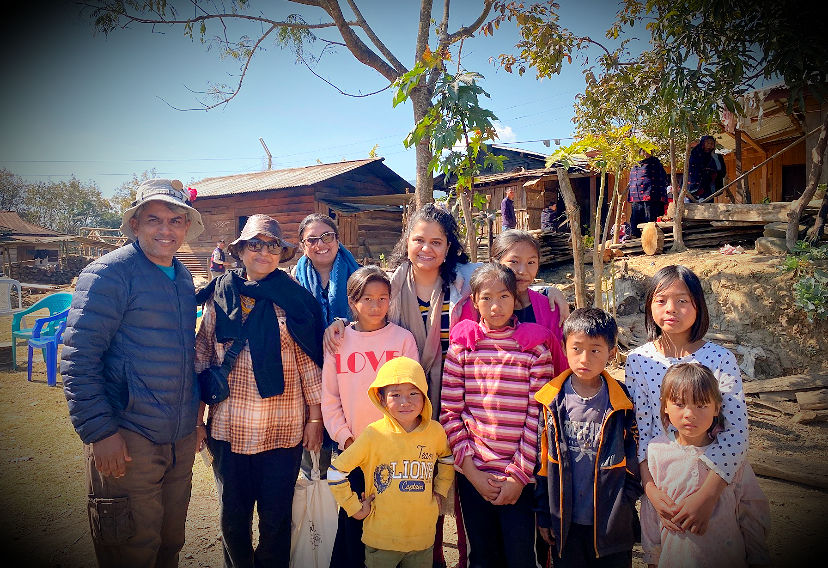
The Farm Level: Co-designing for Impact

"Local farmers are part of both feedback and validation."
The digital revolution promises efficiency at the farm gate, but can technology truly transform agriculture without genuine collaboration? Srishti Chhatwal's work at a climate tech startup directly engages with this nuanced question. She observes that ventures "often underestimate the friction and adoption" inherent in introducing new technologies to farming communities. Her team, building a "data infrastructure, a digital infrastructure" at the farm level, explicitly addresses this gap. Their approach extends beyond data collection by empowering farmers to make "real decisions on water input, soil health, and yield that they can expect on their screens and in their regional languages". This pragmatic focus on tangible, accessible insights is vital for optimizing agricultural practices in a changing climate, directly answering the challenge of practical usability.
The philosophical cornerstone of Srishti's work of "designing with people" is vividly implemented through her co-designed pilots. These initiatives directly address the "huge challenge" of ensuring new tools are not imposed but organically integrated. In these pilots, "local farmers are part of both feedback and validation" of the digital tools and strategies. This collaborative methodology aims to find solutions that gain genuine acceptance and resonate with existing practices and knowledge systems. Beyond simply providing technology, her work equips farmers with the necessary "digital skill set" and provides them with a "go-to-market strategy". This acknowledges the initial capacity gap farmers "might not have initially" when "something technical is introduced," thereby transforming potential resistance into active participation and self-reliance.
Ultimately, this detailed, co-creative engagement at the farm level demonstrates how genuine solutions are "rooted in real impact". Srishti's is about technology and transformation. By creating an environment where "the measurement also includes the very people who are working on impacting", Srishti bridges a critical gap between abstract data and lived reality. This strategic design ensures that digital infrastructure becomes a powerful lever for local decision-making, directly tackling climate challenges while fostering long-term resilience at the most fundamental level of agricultural practice. Her work exemplifies that embedding human participation is an ethical choice and a practical imperative for technology to be truly transformative and achieve its intended effect. It's a testament to the power of human-centered design and the potential for technology to make a real difference in people's lives.
Bridging Divides: Trust, Values, and Uncomfortable Questions
Exceeding technical blueprints, a more bottomless chasm often sabotages sustainable innovation at its very foundation: the human element of trust and conflicting values. Srishti Chhatwal's work with early-stage ventures confronts this fundamental reality. She observes that startups "often underestimate the friction and adoption" inherent in ground-level implementation, particularly when the core struggle between "profit versus purpose”, always contends for the middle ground within founding teams. This internal tension, often unacknowledged, can derail even the most promising solutions. Successfully navigating this landscape demands technological prowess and an equally critical reliance on "trust."
This imperative for trust becomes pronounced when working on the ground in diverse contexts like India. Srishti notes the prevalence of "a lot of social stigma" that systemically affects initiatives alongside complex issues of "social equity, gender bias, and so many other factors". For sustainability solutions to be genuinely effective, they must offer more than "technological aid"; they must address these deeper societal factors. This crystallizes a philosophical lesson: "We cannot copy and paste pilots into people's lives." Solutions must be deeply customized to local realities, acknowledging unique histories and social fabrics. Therefore, truly understanding people "with trust and maintaining their trust" is paramount, ensuring that if communities are "investing their trust in us, that has to be confidential." This emphasis on trust is a cornerstone of Srishti's work, providing a reassuring framework for her approach and instilling confidence in her ability to navigate complex social landscapes.
This ethical imperative extends to preventing "mission drift," a critical challenge when "profit is the key objective." How does one safeguard the original purpose against the gravitational pull of financial metrics? Srishti asserts that "values are essential" and serve as the "centering ground" when "vision and reality and on-ground reality. These four categories always vary in the ratio of people, government, community investors, and the founder. The philosophical litmus test is clear: "Just because the investors are giving you money doesn't mean you should allow them to come in, or you should go ahead with the bid. Your value should align with the investor as much as you are passionate about that cause or the problem you're trying to solve". This principle, prioritized in Niti Aayog's evaluation criteria (where the problem and people are valued above money), underscores how unwavering adherence to core values sustains purposeful action.

"We cannot copy and paste pilots into people's lives."
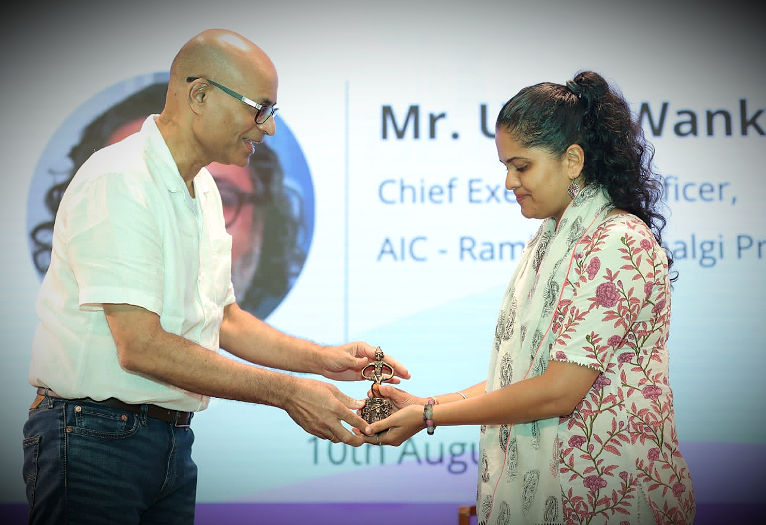
The Lens of Empathy

"Every system has to adapt to individual realities, and we forget that."
A system's resilience is often tested not by its technological sophistication but by its capacity to embrace human variance. Srishti Chhatwal's extensive background in "inclusive education and special needs learning," particularly "children with special needs or neurodiverse learners," yielded a critical insight that now anchors her sustainability work. She observed that "every system has to adapt to individual realities, and we forget that". This profound realization became the crucible through which she now views sustainability itself. Her approach fundamentally challenges conventional, standardized solutions, exposing a core flaw: systems frequently falter when they demand human adaptation rather than adapting to the inherent diversity of human experience and capability, whether that relates to "climate, risk or digital access." This isn't merely an ethical consideration but a design imperative rooted in the very logic of systemic robustness.
This recognition compels Srishti to constantly probe a pivotal question across all her endeavors: "Who's being left out?" For her, equity and inclusion are never mere afterthoughts or add-ons; they are principles "to be designed with" from the outset, serving as "a design principle". Conventional approaches, she notes, often "leave the extremes," prioritizing the broad "masses." Yet, sustainable progress fundamentally necessitates deliberately addressing these marginalized realities. This demands actively understanding the unique challenges faced by "the extremes" and supporting solutions "merged with empathy and effective communication." This philosophical stance argues that genuine sustainability cannot be achieved through a one-size-fits-all model; it requires a granular understanding of varied human conditions and a deliberate, compassionate effort to integrate every individual reality, demonstrating that true systemic strength resides in its most vulnerable points.
This dedication to inclusive design is deeply personal for Srishti, serving as a vital wellspring of her professional fortitude. Her engagements with children "fill me or refuel me for the entire week" and " keep the child in me alive." This ability to reconnect with a childlike perspective is more than a means of personal respite because it imbues her with a unique form of courage and an unfiltered lens for innovation. After "very strong-headed practical meetings, with all technical terms, being compiled with 30 sliders", the capacity to act "like a child, just for yourself, just to ease down. That takes courage," she asserts. She believes "children have the power to do that" and to offer an authentic, resilient vision unburdened by conventional constraints. Her dream of running an "art foundation for children with special needs," focused on open learning "where no questions asked, no constraints," integrating "art and ability to communicate effectively. And life skills," stands as a powerful testament to her vision for empowering individual expression and capability, forging truly adaptive and human-centered systems.
The Interpreter's Palette
Besides the essential human element of inclusive design, the complex landscape of sustainability demands an equally sophisticated blend of analytical rigor and creative flexibility. How does one harness the power of data without losing the nuance of human engagement? Srishti views these forces not as opposing poles but as essential "co-pilots". Her philosophy is clear: "Data tells you where to fire it. Creativity at the same point in time helps us understand how to get people to act on it." This perspective underscores that mere factual presentation is insufficient; a more genuine impact requires actionable translation that resonates with human behavior. The "magic," she asserts, ultimately "lies in the person who is interpreting the data".
Srishti's interdisciplinary background directly informs this crucial interpretive role. Drawing from her psychology background alongside data science and social impact, she gains keen insight to "know the behavioral patterns or the changes behind insight and imagination". This allows her to translate "complex matrix into visual maps" or associate them with compelling "analogies" and "timelines", moving beyond raw metrics to create relatable narratives. This approach fundamentally challenges one directive quantitative methods, often prioritizing objectives and timelines over understanding the human system. By making data accessible and actionable, she aims to ensure that rigorous analysis directly informs creative strategies for impactful engagement.
Her role as an incubating manager further refines this interpretive skill, particularly in simplifying complex frameworks like ESG for early-stage ventures. She practices "thought dumping," allowing founders to express their full range of ideas before her role asks the most uncomfortable questions that help them simplify. “ESG, then, doesn't need to be a 50-slide report". These probing questions, such as "What are you measuring? Who is excluded? What happens when you grow?", are posed early on. This proactive simplification aims to prevent ESG from becoming a "liability later, even at the end stage" by integrating a diagnostic process. Srishti argues that "it's less about money than more about the mindset that we have to be consciously aware of at the same time while working with the frameworks". She observes that the impact "would double if we don't just see it from a narrow perspective by skipping the whole process" of diagnosis, underscoring that rigorous assessment and comprehensive understanding drive sustainable outcomes, beyond mere compliance.

"Data tells you where to fire it. Creativity at the same point in time helps us understand how to get people to act on it."
Scaling Innovation

Sustainable innovations face the persistent challenge of effective scaling. How does one translate context-specific successes into broader, global impact without losing critical local relevance? Srishti Chhatwal's experience mentoring across diverse geographies, specifically in India and Australia, yields a fundamental lesson. She asserts: "We don't have to export solutions. We have to understand the principles". This distinction rejects a 'copy-paste' mentality for innovation, advocating instead for an understanding of underlying ecological, social, and economic principles that can be adapted to local realities.
Her insights reveal that adaptability is paramount. Srishti emphasizes, "What works in, say, Australia might not work in... Maharashtra. It might not work the same way unless tailored or reshaped". This underscores the need to recognize distinct "toolboxes" in different countries, each with unique strengths. The challenge lies not merely in possessing data management skills but in "identifying which tool to use at the right time", ensuring that analytical rigor serves context-specific needs rather than leading one to "bark up the wrong tree" with irrelevant data. This strategic approach demands flexibility and an unwavering commitment to localized solutions, preventing the imposition of external models that fail due to cultural or environmental misalignment.
Srishti's current research at SPJIMR addresses this imperative for context-specific, scalable innovation. She is investigating the "Digital Social Innovation" (DSI) model, exploring "how the last-mile farmer in India can adopt that." Her focus is on ensuring that "digital access is not just... a mere infrastructure," but genuinely "is being used by the last-mile farmer making informed decisions," thereby increasing "the livelihood of the farmers and the social community." This work exemplifies a way of translating high-level concepts into grassroots empowerment.
Furthermore, her research deepens her understanding of the vital nexus between "system, finance, and sustainability finance," specifically examining "how capital moves into climate innovation" and "impact verifications with business valuations". This analytical pursuit aims to bridge the financial mechanisms with tangible environmental outcomes. Her passion for "public policy" is also rooted in its direct link with "climate finance," underscoring that policy frameworks are elementary for channeling financial resources towards climate action and scalable impact. These pursuits collectively represent a rigorous inquiry into the mechanisms required to facilitate widespread, contextually feasible transformation.

The Unlearning Path
The landscape of sustainable innovation often demands less grand expertise and more the humble, persistent act of deconstructing problems individually. Srishti offers unconventional counsel to aspiring innovators, advising them not to "literally wait to be an expert" but to "go out there. Start with one broken thing you care about". This asserts a core philosophical notion: effective problem-solving begins not with encyclopedic knowledge, but with direct, empathetic engagement with a perceived flaw. For Srishti, all aspects of life are "interlinked, it cannot be different. It has to be interlinked". Identifying a "broken thing" personally or locally becomes the potent starting point for broader, systemic impact.
Her approach to innovation is iterative and deeply reflective. She champions "unlearning the problem," not merely rushing to solutions. Her methodology, a constant cycle of "Go back again. Do a pilot, come back again. Think about it, reflect experiment again," cultivates adaptability. Srishti advises: "Worry less... there's no perfect path. We're all writing our stories." This mindset builds resilience, acknowledging that rich lived experiences "feed our work and our souls." Personal integration of life and work fuels sustained purpose.
Srishti's guidance culminates in an imperative for direct engagement. "Sustainability isn't about staying in the room", she asserts. "You have to step out. You have to be on the field and with the people". This isn't a preference, but it is a methodological necessity to her. Her work-life balance embodies this, as she meticulously splits her time between boardrooms and days in the field. This rhythm, she explains, "refuels" her and "keeps the child in me alive," embodying a courage to be childlike even after "very strong-headed practical meetings". This fusion of professional rigor and authentic self-expression, driven by children's innate "power to do that", provides an unfiltered, perceptive lens for continuous innovation and profound impact.

"Sustainability isn't just about staying in the room. You have to step out. You have to be on the field and with the people."

Drive and Responsibility
In addition to the intricate mechanics of strategy and data, the singular engine of sustainable impact resides in an unyielding, deeply human drive to serve. A belief Srishti Chhatwal's underlines with her career trajectory. Her primary motivation is "people". She finds a visceral resonance "when... I see the impact or the change in the lives of people firsthand", transforming observation into purpose. This reveals conviction: professional purpose attains its highest form by serving humanity. Her decision to embrace a "misfit" path of exploration, choosing it over a "complete corporate structured way," stemmed from the understanding that "you always have a story to write", in her view, each experience enriching her capacity for impact.
This personal drive is inextricably linked to a sense of civic duty, a principle instilled early in her life. Srishti emphasizes a wisdom learned from her grandfather: "it's your responsibility to give back to the people. Not just take". He taught her: "whatever you do... do it well, you do it honestly, and you do it for the people". This ethos underpins an unwavering commitment to stewardship in service of others. Her philosophy culminates in a powerful assertion about collective agency: "Small acts, when... multiplied by millions of people, can transform the world". This belief is grounded in the observation that "people mirror each other", capable of creating "a large wave of positive impact," demonstrating that shared purpose defines enduring human achievement.
What I Learned From Srishti Chhatwal
-
Sustainability demands a systemic, inclusive lens, prioritizing "designing with people" for genuine impact.
-
Effective grassroots innovation requires co-design with communities, valuing their feedback and digital skill adoption.
-
Bridging divides in innovation hinges on trust, aligning values, and customizing solutions to local social realities.
-
Inclusive education insights confirm that systems must adapt to individual realities, making equity a core design principle.
-
Sustainability leadership requires blending analytical rigor with creativity, unlearning problems, and direct field engagement.

Introduction: The Ecologist as Interpreter
In a world demanding urgent ecological action, how does a nuanced understanding of systems, people, and humility redefine the very practice of conservation? Dr. Arghya Chakrabarty's professional journey is rooted in a fundamental fascination for "the interface between life systems and their habitats". This profound curiosity propelled him towards ecological fieldwork, driven by a desire to experience these dynamics "in situ, not just through data sets or literature". He realized early in his career that direct engagement in the field "not only sharpened scientific understanding", but critically, it also unveiled a "complexity and nuance that models or remote sensing cannot alone capture". This includes insights from "the quiet indicators. The seasonal rhythms, the local and traditional knowledge systems". This multidimensional learning, grounded in observation, patience, and presence, draws him back to ecological fieldwork.
Arghya, however, resists the singular label of "scientist". He clarifies that defining oneself "only as a scientist can sometimes narrow the lens through which we can view ecosystems". While acknowledging that "Science is critical" for providing tools to "measure, model and hypothesize", he emphasizes that complex landscapes, particularly in regions like northeast India and the Himalayas, demand a broader perspective encompassing "listening, empathy and cultural sensitivity". He identifies himself as "more of an ecologist, yes, but also as a learner, a facilitator, and sometimes even an interpreter between the different systems of knowledge". This expansive identity underscores that fieldwork teaches "humility", revealing how ecological patterns are shaped "not just by natural laws, but by history's people, and sometimes chance".

"He identifies himself as 'more of an ecologist, yes, but also as a learner, a facilitator, and sometimes even an interpreter between the different systems of knowledge'."

The Philosophical Heart of Ecology: Himalayan Wetlands

Arghya's deepest emotional and intellectual connection lies with the high-altitude wetlands of the Himalayas, particularly those in Himachal Pradesh, India. He describes these ecosystems as "stark and breathtaking". They are characterized by their profound "silence, seeming fragility, the immense life they support in such harsh and remote conditions". In these challenging environments, where life tenaciously clings to existence amidst extreme elements, traditional metrics of "scale, time, and productivity” are all redefined. The very notion of growth, abundance, and survival takes on a profoundly different meaning, consistently challenging conventional ecological understanding and human-centric perspectives. He recounts a vivid observation that crystallized his understanding: witnessing a
black-necked crane resting near a saltwater marsh fed by a glacial melt. This singular experience, among others, fundamentally shaped his perception of conservation in such delicate, yet resilient, regions.
Conservation here, he asserts, is not merely about protecting "isolated species" or a single environmental component. Instead, it fundamentally concerns "more finely balanced systems that are deeply tied to cultural practices, hydrological flows, and even geopolitical tensions", especially given their proximity "near the China border". This intricate web demonstrates that environmental challenges are rarely purely scientific; they are deeply human. This deep interconnectedness culminates in Arghya's core philosophical stance on ecological integrity: working in these wetlands taught him that "ecological integrity is not a scientific variable. It's a philosophical one". This insight forms the bedrock of his holistic perspective, compelling him to recognize that environmental issues are inseparable from the intricate web of human history, local culture, and broader geopolitical dynamics, consistently remaining central to his understanding of ecosystems.
"Ecological integrity is not a scientific variable. It's a philosophical one."
Chandra Taal: Intersection of Nature, Culture, and Governance
A prime example of Arghya's integrated ecological philosophy is Chandra Taal, a high-altitude wetland that formed a core part of his PhD research. Often perceived primarily through its "postcard beauty", Chandra Taal is a "high-altitude glacial lake ringed by snow peaks". It holds immense ecological, cultural, and strategic significance. Ecologically, it stands as a "rare freshwater system in a largely cold desert," sustaining a diverse array of adapted flora and fauna, including vital migratory birds like the "Ruddy shelduck" and the elusive "Himalayan Ibex" in its surrounding habitats. Its existence is crucial for regional biodiversity. Beyond its rich biodiversity, Chandra Taal also plays a "critical role in the local hydrology," feeding into larger river systems like the Chandrabhaga that "sustains life downstream", demonstrating its widespread ecological importance.
However, as Arghya emphasizes, its profound "connection to people" is often overlooked. For local pastoralist groups, such as the "Ghadis," Chandra Tal is "embedded in traditional seasonal migration routes" and is "considered sacred by many with oral histories and spiritual associations" that guide human interaction with the wetland. These deep cultural ties and traditional practices form an indispensable layer of stewardship. This inherent link means "any conversation on conservation cannot be delinked from livelihoods, belief systems or mobility patterns", recognizing that human well-being is intrinsically tied to ecosystem health.
From a policy perspective, Chandra Taal is a "critical test case for framing conservation in fragile Alpine systems". Despite its designation as a Ramsar site, Arghya notes that "designation alone doesn't protect it"; it requires active, on-ground management. His work with Wetlands International involves implementing an "integrated management plan" (prepared with the State Forest Department of Himachal Pradesh), a comprehensive strategy. This plan rigorously "ties ecological monitoring with tourist regulation, catchment, level planning and community stewardship", demonstrating a multifaceted approach. Ultimately, Chandra Taal matters because it sits at the "intersection of biodiversity, climate, resilience, and sociocultural continuity". It profoundly "challenges us to think of wetlands, not as isolated systems or isolated units, but as living systems embedded in people and politics".

"Any conversation on conservation cannot be delinked from livelihoods, belief systems or mobility patterns."
Economic Valuation: Making the Invisible Visible

"To make visible what matters, even when we can't always quantify it neatly."
Arghya's research into the economic evaluation of biodiversity and ecosystem services reveals an often unsettling paradox: "how persistently invisible many ecosystem services remain in decision making even today". Despite the availability of sophisticated tools to assign economic value, directly and indirectly, a significant portion of nature's contributions often "fall through the cracks, especially in developmental planning". This critical oversight incurs long-term ecological and societal costs. He notes that easily monetized "provisioning services, such as tourism," tend to be readily accounted for. In stark contrast, vital "regulating services like flood buffering" frequently go unvalued, leading to critical blind spots in policy and investment decisions.
A particularly "striking insight" from his work has been the pervasive undervaluation of "cultural and relational values, especially in indigenous and local contexts". In the wetlands and forest landscapes where he conducts his fieldwork, communities relate to ecosystems not merely as a "natural capital" to be exploited or quantified, but as "teachers, or spiritual entities". These deep, intrinsic relationships form the fabric of human-nature coexistence and are inherently complex. They "don't translate easily into rupees or dollars". The attempt to force these underlying connections into purely monetary terms often serves to "flatten their significance", reducing a multidimensional bond to a simplistic transaction.
Yet, ignoring these invaluable, non-quantifiable dimensions carries severe consequences. Arghya warns that policies developed without acknowledging such cultural and relational values are "ecologically unsound" and "socially unjust". This highlights a critical ethical imperative in conservation: true sustainability demands a valuation framework beyond mere economic metrics. While acknowledging that "valuation frameworks are powerful", he stresses they also "have their limits" and "should not be used just to assign prices". Instead, they aim "to shift attention, to make visible what matters, even when we can't always quantify it neatly". Arghya brings this lens to his work, leveraging valuation as "a bridge between ecology, equity, and ethics", thereby seeking a more comprehensive and just understanding of nature's worth

Science Communication: Balancing Accuracy with Advocacy
The very idea of objectivity in science, Arghya notes, is "often misunderstood". Scientific integrity, he clarifies, is "not about being emotionally detached". Instead, it demands being "rigorous, transparent, and honest about uncertainties". Yet, facing the undeniable acceleration of "climate change and biodiversity loss", objectivity cannot imply neutrality. The data reveals "alarming trends in species, extinctions, hydrological shifts, ecosystem collapse". To remain dispassionate in the face of such evidence, Arghya argues, would be "intellectually irresponsible" and a failure to treat these findings with the "urgency they demand". This ethical imperative compels a scientist to engage beyond mere data presentation.
He asserts that the true "balancing act" for a scientist lies "between being accurate and being heard". Science often communicates in terms of "cautious probabilities", while "policy and public awareness respond to clarity and conviction". This inherent tension creates a significant gap, which Arghya identifies as residing "not in the science itself... but in how we frame it". Scientists sometimes "fail to translate complex findings into stories people can relate to, or that policymakers can act on". Despite a "fear of being seen as advocates", Arghya contends that in today's context, scientists must assume dual roles: both "interpreters and advocates for evidence of science".
Anchoring science in relevant, actionable contexts is paramount for shifting systems. Arghya emphasizes that what has helped him in this endeavor is "working closely with communities". This involves actively "translating findings into local ideas and co-creating interventions rather than presenting top-down recommendations". The core principle is clear: "Science must be made relevant, not just accurate. If we want to shift systems". This stance transforms scientific endeavor from a passive pursuit of truth into an active, engaged force for societal transformation, directly addressing the urgency of ecological crises.

"Science has to be made relevant, not just accurate. If we want to shift systems."
Collaborative Conservation: Tools, Institutions, and Community

Effective conservation, Arghya demonstrates, hinges on a sophisticated blend of knowledge systems and collaborative tools. In his fieldwork, he relies on a powerful combination of "traditional ecological knowledge, direct observation, and modern technologies", each bringing unique strengths to biodiversity tracking and analysis. Among the most potent modern instruments are "remote sensing and GIS mapping", crucial for monitoring landscape-level changes in "habitat extent, fragmentation" and "hydrology" in remote areas like Chandra Taal. He also utilizes advanced techniques such as "camera traps and bioacoustic sensors" and "Environmental DNA (eDNA)", an "emerging tool that can detect species from soil or water samples, offering a rapid and cost-effective way to assess biodiversity".
However, technology alone is insufficient without human partnership. Arghya champions "community-based monitoring" as "an essential tool". Engaging local "wetland mitras, volunteers, forest watchers, or village youth taps into invaluable knowledge and multiplies the scale of data collection". This approach also fundamentally "empower[s] stakeholders" and grants "more power to citizen science". Expanding these diverse tools across India demands "more capacity building, open access platforms for data sharing and the integration of traditional knowledge systems". Institutions must foster "partnerships among academia, government, and civil society to co-design monitoring programs that are both scientifically robust and locally relevant". This hybrid approach ensures data is "both reliable and actionable for conservation and policy interventions".
Beyond tools, institutional support is critical. Arghya highlights the need for support that values "continuity, collaboration, and context at the policy level". A significant requirement is "long-term flexible funding", as conservation efforts often take "years... decades to yield outcomes", unlike short project cycles. Stronger platforms are needed for "integrating science and policy", with "embedded science advisors in government bodies" to bridge the gap. Institutions should also "invest more in people, not just projects", providing mentorship, field safety, mental health support, and recognition for emotional labor. Ultimately, local communities are "not just stakeholders. They are knowledge holders, stewards" and the most enduring presence in any conservation effort". Scientific projects are stronger and more ethical when they are designed with communities rather than for them", making their role "central to both the credibility and longevity of ecological work".
"Conservation isn't about perfection. It's about participation."

What I learned from Arghya Chakrabarty
-
Ecological understanding extends beyond science to include humility, cultural sensitivity, and local knowledge.
-
Ecological integrity is a philosophical, not just scientific, variable, deeply tied to human history and geopolitics.
-
Valuation of nature must include "invisible" cultural and relational values to avoid ecologically unsound policies.
-
Science communication requires balancing accuracy with advocacy, framing findings into actionable stories for diverse audiences.
-
Effective conservation demands collaborative, interdisciplinary approaches, leveraging diverse tools and empowering local communities.

The Human Variable in ESG
How does an inherited vision of planetary stewardship intersect with personal ambition and pursuing entrepreneurial freedom? Once a niche concern, environmental sustainability has rapidly evolved into a complex, multi-faceted domain demanding deep scientific understanding and agile, real-world application. At the forefront of this dynamic shift stands Lipi Gandhi, an individual whose professional trajectory is uniquely shaped by a blend of generational wisdom and a distinctly modern entrepreneurial drive. Her path is not merely a continuation of a family legacy but a redefinition, forged by her commitment to impactful collaboration.
Lipi's approach to her work is fundamentally rooted in a philosophy of liberty and flexibility. Unlike conventional corporate structures that might constrain scope, her independent path allows her to "literally approach anybody" and "collaborate with them on new projects." This entrepreneurial streak is not just a personal preference but a transformative force. It turns every project into a "huge learning opportunity," enabling her to pick up and work on varied challenges simultaneously. Such freedom becomes a powerful engine for continuous learning and broad-spectrum impact, setting the stage for how she navigates the intricate world of environmental science and its real-world applications.

"You'll always have opportunities in environmental science, because that's where the base lies."

Forging Her Crucible: Tech, Impact, and Independence

An early and powerful influence profoundly shaped Lipi's professional trajectory into environmental science: her father's work in a domain he pursued long before it gained widespread recognition. This upbringing fostered a subconscious alignment with environmental concerns. The decisive moment, however, arrived with her father's foundational counsel during her university applications. He posited that "as long as there's an earth existing, you'll always have opportunities in environmental science, because that's where the base lies". This statement, anchoring a career path to the planet's very survival, imbued her with a robust and enduring sense of purpose. Her subsequent realization that she 'really loved the subject' affirmed this early guidance.
The transition from academic insight to practical implementation demanded a critical impact assessment. While corporate experience offered valuable industry insights, Lipi deduced that "the real impact is being made when you're making your hands dirty and working on the ground". This was not a pragmatic calculation of efficacy: a perceived corporate path, she concluded, "may not give that much of an impact, or it will take me a longer time". This pursuit of direct, accelerated influence propelled her towards her independent setup, driven by "flexibility and adaptability" principles. Her choice reveals a foundational belief in the inherent value of tangible, immediate contribution over structured progression.
Navigating a path where a pioneering parent has already charted the course presents its challenges, often met with external assumptions of inherent ease. Lipi acknowledges that people "often think that" her journey is simpler due to her father's foundational insights and 25 years of experience. Yet, she maintains the logical imperative of individual exploration: "everybody has their own path. He has navigated his own path... it's a part of my own which I will discover myself". Her generation's inherent technological fluency defines this distinct journey. Lipi actively integrates "geospatial software," "AI data-based solutions," and "machine language" to "reduce the human burden of working through that and then do the work smartly". This strategic application of intelligence to automate routine tasks frees up cognitive resources for higher-order strategic thinking, fundamentally reshaping the approach to environmental problem-solving. Lipi demonstrates that innovation includes new goals and means to achieve them efficiently.
"The real impact is being made when you're actually making your hands dirty working on the ground."
Systems Interconnected: Holistic Design for Complex Realities
A common misconception pervades the environmental discourse: elements like water and ESG are "2 different segments". Lipi Gandhi argues for a more integrated reality. Water, she asserts, is fundamentally "a component of ESG as well". From her perspective, it is merely "putting the front glasses and looking at all of it together, because it's not different components". This insight is critical: while the "weight on each component could be different" in varying situations, they are invariably "part of the same system". A proper understanding of sustainability necessitates perceiving the interconnected system, rather than dissecting it into isolated, unrelated parts.
Approaching 'such complexities' demands a holistic design philosophy. Lipi's method involves first identifying 'who is at the core of it' and then discerning 'who is going to be impacted and who's going to implement it'. She firmly believes 'looking at it from a holistic perspective is the best way to go about it'. In her view, effective decision-making cannot be based on siloed observations; it always has to integrate data and strategy and draw lessons from real case examples. What approach is not working? What are the failures? What are the setbacks of certain approaches? It is vital to 'put them holistically together and understand every bit of it. And it's not rocket science. It's just elementary science. This pragmatic understanding underscores that complex sustainability problems often yield fundamental, integrated solutions.
This interconnectedness became clear to Lipi through a case study she observed closely: an urban housing society grappling with water scarcity. Despite being inhabited by "very well off people who can afford water from outside", the society over-exploited groundwater by drilling boreholes. It relied heavily on "informal water markets" via tankers at a "huge economic cost". Though built, a mandatory water treatment plant for grey water recycling was non-operational for "4 or 5 years". Upon its revival, the society's "dependency on the external water tank is drastically reduced," and the "economic cost" decreased. This economic benefit even swayed residents who initially harbored "social aesthetic perspectives" (concerns about odor from using grey water in flushes or gardening). Lipi's deduction: "a social perspective is everything". Technology, however resilient, is ineffectual if "people are not ready to accept it". This illustrates that perceived social or aesthetic barriers, and even economic comfort, can be overcome when a tangible benefit aligns with practical needs, highlighting the complex interplay of social, financial, and technological factors in sustainable transformation.

"A social perspective is everything."
India's Blueprint: Decentralized Power, Data, and Ground Truths

Crafting a national blueprint for sustainable transformation in India confronts an inherent, multifaceted complexity. Lipi emphasizes that the country's "socioeconomic perspective is quite diverse and complex." This intricacy extends to governance, where understanding "who is actually at the governance end is quite difficult for a layman." A single resource, she observes, might have "five government entities looking at it, or maybe some private entities or public-private partnership." This intricate web demands a framework that can navigate such granular complexities effectively.
Lipi proposes decentralized governance as a practical and effective approach. This model shifts from a top-down, "trickled down from a lot of different levels" approach to one where responsibility is "being taken care of by one entity". Crucially, this singular entity "should also include the people impacted by it, like it could be locals. It could be any experts from that particular region because they understand it better than anybody else who's coming and implementing it". This philosophical stance validates local, lived experience and regional expertise as paramount, recognizing that genuine solutions emerge from those closest to the problem.
Complementing decentralized governance, Lipi stresses the imperative to "definitely leverage on... data and technology integration". India possesses "ample amount of data" and "good amount of technology", which, when properly utilized, can make efforts "efficient" and "better prepared for any sort of resilience" towards goals like "net zero targets for water". However, technology alone is insufficient. It must align with "practical regulation and ground reality of that perspective". Setting targets like "30% in 2 years" must be assessed for ground achievability. The focus must shift to identifying "the root of it", as simply "overburdening it with some sort of things" will not yield "a long-term solution. This practical realism, coupled with ongoing "awareness and training", which gains traction as people personally observe "climate change", forms the bedrock of a solid and adaptable national blueprint.
"Speaking to people gives you great insights."
Evolving Expertise: Learning on a Dynamic Green Frontier
How does one maintain intellectual acuity and drive innovation in a field as volatile and rapidly evolving as sustainability? Lipi Gandhi describes the constant flux, noting that "sustainability changes daily" and the "madness" of ceaseless new regulations, particularly in regions like Europe. Her discipline for navigating this dynamic landscape centers on continuous learning, emphasizing that "educating yourself in any form is just important". This extends beyond traditional reports and newsletters to reading newspapers, which she finds "the easiest thing" for discerning environmental issues. She champions "speaking to people" as a source of "great insights". This encompasses learning from seasoned professionals with "over 20 years " or " over 30 years" of industry experience, as well as from "smart and self-aware" students who offer fresh perspectives. Furthermore, she actively seeks insights from diverse domains beyond core sustainability, such as "architect" or "IT sector," recognizing emerging opportunities in conventional fields.
The ingenuity gleaned from unexpected sources, particularly students, highlights a critical element of foresight. Lipi recounts being "just mind-blown" by students' ideas for turning sustainability problems into business opportunities. Specific examples included managing "construction debris" from deconstructed sites by "introducing credits, […] for them", and the concept of "water credits". These demonstrate that innovative impulses arise when individuals are empowered "to put their own experience into a different dimension", perceiving economic or sustainable opportunity where others might only see nuisance or waste. It illustrates that equipping individuals with a discerning lens and incentive can unleash a cascade of previously unconsidered solutions.
Lipi also systematically addresses the pervasive misconception that concepts like ESG are "rocket science, or it's complicated. It's way too technical or very complex with so many elements". Her counter-argument: it's "rooted in the basics". She parallels traditional Indian practices such as rainwater harvesting pits, the spiritual reverence for rivers, which inherently discouraged pollution, and the age-old practice of carrying reusable water bottles. These historical examples demonstrate that fundamental sustainable behaviors are not complex innovations but often inherent, intuitive actions. When confronted with the notion that ESG is "all about numbers", Lipi advocates for explaining it "through their own perspective". Critically, this involves leveraging "data visualization", using tools like satellite imagery to show "before after scenarios of maybe floods and droughts. Such visualization makes complex data "easily understandable for laymen". The core challenge, then, is not the inherent complexity of sustainability, but the clarity of its communication: it is "all a game of how you put it down in front of the other person who's not understanding it".

"It's not a competitive domain, it's a domain of collaboration."
Purpose and Persistence: A Lasting Contribution

The path of an entrepreneur in sustainability, defined by innovation and a departure from convention, inevitably confronts moments of self-doubt. Lipi acknowledges that "time and again it comes with everyone" to reflect and question choices. Her method for navigating such inevitable setbacks is to "look back on it in perspective of why I started it in the first place". Her entrepreneurial leap, a "very thought-through decision" taking six months, was anchored in finding "happiness in this work" and the conviction that she was "making an impact". This consistent reaffirmation of her core purpose is the crucible of her resilience, demonstrating that enduring drive stems from a clear internal compass, not external validation.
For those embarking on a similar journey, Lipi offers direct counsel. She unequivocally states, "No time better than now to enter into the domain of sustainability because there are so many opportunities". Her advice, particularly for women entrepreneurs, is to "find your core reason for why you started it in the first place, and... standing on your beliefs is the most important thing". The indispensable value of networking complements this resilience through setbacks. Lipi identifies networking as "the most important thing" because sustainability is uniquely a "domain of collaboration," not competition. As "not everybody is one stop solution to everything," the field thrives when "ten experts can come together for one project". This collaborative ethos amplifies individual impact, transcending traditional competitive paradigms.
Lipi's broader vision for her contribution crystallizes around a niche: the market for water and ESG. Despite its critical importance, she notes "water stewardship" is "not a very talked about topic" in the Indian scenario, unlike carbon markets or waste management. She actively seeks to "tap into the market" here, acknowledging the domain's relentless evolution. "The domain of sustainability is ever evolving. You never know when one thing will go out because regulations constantly change." This requires continuous adaptation, as exemplified by the rapid shifts in European ESG regulations. Lipi's trajectory, from inherent passion to tech-driven pragmatism and collaborative vision, underscores a fundamental truth: in an ever-evolving domain, true legacy is forged not by fixed solutions but by an unwavering commitment to purpose, adaptable learning, and a relentless pursuit of interconnected impact in service of a living planet.
"No time better than now to enter into the domain of sustainability because there are so many opportunities."
What I learned from Lipi Gandhi
-
Entrepreneurial freedom, coupled with adaptability, drives broad-spectrum impact in sustainability.
-
Intergenerational wisdom and personal passion form a powerful foundation for a purpose-driven career.
-
True impact requires getting "hands dirty" on the ground and leveraging technology to work smartly.
-
Sustainable solutions demand a holistic perspective, integrating social, economic, and technological factors for public acceptance.
-
The sustainability domain is a collaborative field, emphasizing continuous learning and networking over competition for lasting contributions.

An Unconventional Path to National Transformation

Can a microscopic understanding of remediation unlock macroscopic solutions for a nation's waste challenge? The ubiquitous presence of waste is often considered an unavoidable byproduct of human activity, a problem to be contained rather than a resource to be leveraged. It is typically relegated to the periphery of public discourse, a topic deemed unpleasant and lacking tangible value. Yet, Dr. Abhishek Khapre, a trained bioengineer, brings a unique perspective to this universal challenge. His journey began deep within the intricate world of microbiology and genetic engineering, focused on the bioremediation of contaminated water bodies.
However, this initial immersion in lab research soon exposed him to a significant chasm: the disconnect between technological development and policy formulation at a national level, and their actual implementation on the ground. This stark realization propelled Abhishek out of the laboratory and into the complex, often messy, realm of large-scale waste management projects. His trajectory, from academic researcher to private consultant, then to engagement with state governments, and now providing consultancy to both, is a testament to a mind driven by a singular purpose: to bridge the gap between scientific theory and practical, impactful solutions in India's critical waste sector. His work is not just about waste management but the crucial intersection of science and policy, and the need to understand the "other side". These are the on-ground realities that often hinder the very progress envisioned in policy and research. Abhishek's collaborative approach invites us all to be part of the solution and be integral to the process.
"I wanted to have a look from the other side."

Swachh Bharat Mission: The Evolving Canvas of Cleanliness
Is cleanliness merely an aesthetic pursuit, or the very bedrock upon which a nation's health and dignity are built? This fundamental question underpins the ambitious undertaking of the Swachh Bharat Mission, or "Clean India Mission," launched by India's Prime Minister in 2014. Conceived with distinct rural and urban streams, its initial phase, Swachh Bharat Mission 1.0, was a direct assault on open defecation, manifesting in a nationwide drive to construct household and public sanitation facilities. It was a foundational, yet critical, step towards a basic standard of public hygiene, a necessary precursor to any broader environmental transformation.
However, as Abhishek highlighted early in our discussion, there was a noticeable disconnect. He observed that "the technologies on the ground, or the policy implementation on the ground, is quite lacking". This crucial gap between grand intent and pragmatic execution became the driving force behind the mission's evolution. Now in its second, more sophisticated iteration, Swachh Bharat Mission 2.0, the focus has pivoted dramatically from mere collection and transportation to the far more complex waste and wastewater processing domain. This transition signifies a profound philosophical pivot: waste is no longer just something to be removed, but a resource to be rigorously treated and, crucially, reintroduced into the system for reuse. Abhishek's expertise and insights have played a significant role in shaping this transition. His work with state governments and as a private consultant has been instrumental in bridging the gap between scientific theory and practical, impactful solutions in India's critical waste sector.
The mission's progress is meticulously tracked through the "Swachh Survekshan," a quarterly national cleanliness survey. This survey rates urban local bodies (ULBs) in terms of their on-ground implementation, serving as a crucial tool for accountability. It is a comprehensive assessment tool that evaluates urban areas' cleanliness and sanitation conditions, clearly showing the mission's progress. The Swachh Survekshan goes beyond achieving "Open Defecation Free" (ODF) status, as cities now strive for "ODF++" and the advanced "Water Plus" and "Water Plus Plus" ratings, which measure the efficacy of wastewater treatment and its subsequent reuse. This systematic incentivization, a deliberate shift from mere penalties, is a critical mechanism for behavioral change. Abhishek explicitly stated, "Rather than penalizing someone... when you start incentivizing his efforts, people are carried away to that side very quickly towards the incentives". This pragmatic understanding of human motivation is key to the mission's long-term sustainability. The Swachh Survekshan, with its focus on incentivization and behavioral change, plays a crucial role in this sustainability, encouraging cities to strive for higher cleanliness and sanitation standards.

"The technologies on the ground, or the policy implementation on the ground, is quite lacking."
Waste: A Bioengineer's Lens

"We have to make the governance strong, the willingness of these corporations to really go for a change, and then things"Waste is again a variable term. It's based on the theory of relativity. It is something which is, waste for you must not be waste for others." will start."
For Abhishek, the transition from the controlled environment of a biotechnology lab to the expansive, often chaotic, landscape of municipal waste management was not merely a change of scenery but a fundamental shift in perspective. His bioengineering background, steeped in the intricacies of microbiological processes, afforded him a unique ability to connect seemingly disparate elements on a grander scale. He speaks of discerning "the larger goals or the larger points rather than working just for a village, or just for a town, or just for a city, when working for the entire nation". This macro view, unusual for someone trained in micro-level remediation, allowed him to see patterns and possibilities where others perceived only problems.
"Waste is again a variable term. It's based on the theory of relativity. It is something which is waste for you must not be waste for others". This statement challenges the conventional, linear understanding of disposal. For instance, while urban dwellers might discard fruit peels as waste, rural communities often repurpose them as cattle feed. This seemingly simple observation carries immense philosophical weight: it reframes "waste" not as an endpoint, but as a "substrate," a valuable raw material ripe for transformation within a circular economy model. Abhishek articulated this clearly: "When the entire city throws their trash out, and it reaches the dump site, that is a substrate for us. We are processing it, and we are making wealth out of it". This concept of waste relativity is a key principle in Abhishek's approach to waste management, emphasizing the need to view waste not as a problem, but as a potential resource that can be harnessed for the benefit of society and the environment.
His work is intrinsically about this alchemy, converting discarded materials into tangible assets. This "wealth" manifests in various forms: energy, such as biogas or electricity, or other resources like recyclables and reusables. The objective is to consistently integrate these recovered elements into productive cycles, closing the loop and reducing reliance on virgin materials. This perspective is not merely theoretical; it underpins the design of Detailed Project Reports (DPRs) for solid waste management. Abhishek stresses that successful DPRs cannot be uniformly replicated across India due to the nation's vast diversity. Factors such as geographical location, climatic conditions, population density, and local economic drivers dictate the appropriate technology. A city near agricultural fields might benefit most from composting to produce manure, while an urban center could generate biogas and electricity. This nuanced, systems-based approach ensures that waste is viewed not as a static burden but as a dynamic component of an interconnected system, waiting to be valorized.
Ground-Up Innovation: Indore and the Bamboo Forest
If the "theory of relativity in waste" provides the conceptual framework, then cities like Indore offer tangible proof of its application. Abhishek points to Indore, consistently recognized as India's cleanest city, as a prime example of a successful circular economy model. The town processes approximately 920 tons of waste daily through a Compressed Biogas (CBG) plant. What renders this model particularly compelling is its self-sustaining nature: the city's waste is collected by vehicles fueled by the very CBG produced from that waste. This closed-loop system demonstrates how waste can be transformed from a burden into a localized energy source, proving that a holistic approach can yield remarkable results and contribute significantly to urban cleanliness and resource independence. Abhishek describes this as a "sustainable model, and the results are in front of the nation". Indeed, Indore has maintained its status as the cleanest city for the past six to seven years, a testament to the efficacy of this integrated approach.
Beyond urban waste-to-energy, Abhishek also presented a strikingly innovative, biologically driven solution to an industrial challenge: the phyto-capping of fly ash ponds. Historically, thermal power plants, such as the bituminous coal-fired facility near Koradi, Nagpur, accumulated vast quantities of fly ash, a byproduct dumped into expansive ponds. This widespread practice creates significant environmental hazards, including the dispersal of delicate particulate matter as wind-blown litter. Working with Dr. Lal Singh, a scientist at CSIR-NEERI, Abhishek explored an unconventional solution: planting bamboo over these ash ponds. The rationale was simple: bamboo requires minimal water and less soil stability than other plants, making it ideal for such challenging terrains. After seven to eight years, the result was a transformative "green forest of bamboo", dramatically reducing wind-blown litter by 90 to 95% in that area. The bamboo leaves effectively trapped the dust, and during the rainy season, the dust and beneficial micronutrients from the leaves returned to the soil, creating a self-sustaining ecosystem.
This success story vividly illustrates Abhishek's core philosophy regarding sustainability, which he frames around the "3 E's: that is, ecology, environment, and economy". He posits that if these three interconnected pillars are disturbed, true sustainability becomes unattainable. The bamboo forest project demonstrates this tripartite equilibrium with clarity: ecologically, it revitalizes barren and polluted land; environmentally, it mitigates air pollution; and economically, it transforms an industrial waste product into a valuable natural resource. These are not isolated examples but systemic solutions, emerging from an understanding of complex interdependencies.

"This is a sustainable model, and the results are in front of the nation."
Navigating Complexity: The Human Element in Large-Scale Projects

"Building trust and fostering cooperation in complex public projects is 'the tough task'."
Implementing large-scale waste management solutions, however technologically sound, inevitably confronts a crucible of human dynamics. Abhishek unequivocally states that building trust and fostering cooperation in complex public projects is "the tough task". It is not a matter of immediate transactional trust, but a carefully cultivated relationship. His experience reveals that technical advisors must demonstrate their solutions through tangible results. This often necessitates initial, unfunded pilot studies, showing "what the major goal will look like or what the entire city will look like". Stakeholders, particularly urban local bodies (ULBs) and government entities, can only commit to complex public-private partnerships. This pragmatic approach acknowledges that public funding cannot encompass every project, particularly given governments' myriad responsibilities, from border security to healthcare and education.
The intricacies of implementation in India are further compounded by its unparalleled diversity. Abhishek’s work across different states, from Madhya Pradesh to Uttar Pradesh and coastal Maharashtra, exposed him to a critical, often underestimated, variable: language and local context. He discovered that effective communication mandates engaging in the local language, even if it is just a few words or sentences. This seemingly minor effort "gives them a nice impact on your relations with those locals". This is not merely about courtesy but building the necessary connection to overcome the significant "lacuna" of public participation. As Abhishek notes, if the public for whom these efforts are intended "are not ready to keep the surroundings clean," comprehensive success remains elusive.
This leads to a pervasive misconception that Abhishek actively addresses: the belief that waste management is solely the corporation's or government's responsibility. While taxes are paid, the sheer scale of India’s population, exceeding 1.4 billion, renders it "absolutely impossible for any corporation or any State government, or any central government to manage the West reduced by 140 crore public". The philosophical implication here is profound: Effective waste management is not just a civic service, but a shared liability demanding individual responsibility. The practical consequence of this misconception is evident in the 99% mixed waste arriving at landfills, complicating mechanical segregation and often relegating it to informal workers, compromising their dignity. Abhishek argues that a simple, yet transformative, solution lies at the source: segregating wet and dry waste at the household level, which could solve "60% of the problem". This requires a fundamental shift in individual mindset and a recognition of one’s direct contribution to a cleaner, more sustainable future.
The Unwavering Process: A Philosophical Stance for the Future
Abhishek's pragmatic philosophy extends beyond immediate solutions to encompass a foundational principle for sustained progress: the unwavering commitment to the process. He articulates that even if a system is not yielding 100% efficiency, "the process must go on". This insight is rooted in his bioengineering understanding; akin to a biogas plant in winter, where bacteria's energy shifts to self-preservation, stopping the process would require significant energy and time to reactivate the microbial culture, making resumption more arduous than continuation. Therefore, "the emphasis should be given on the process".
This long-term perspective is crucial for the future of sustainability. For Abhishek, waste is intrinsically a resource capable of generating electricity, biofuels, biogas, or valuable manure, transforming sterile products into beneficial soil conditioners. He argues against the short-sightedness of overconsumption and overproduction, warning of consequences like microplastics in human DNA, a stark outcome of just seven to eight decades of unchecked behavior. His vision for the next decade is clear: a collective mindset shift where waste is universally recognized not as an abomination, but as a dynamic resource, integral to a truly circular economy and preserving our planet for generations yet to come.

"Even if a system is not yielding 100% efficiency, 'the process must go on'."
What I learned from Abhishek Khapre
-
True solutions require bridging the gap between scientific theory and on-ground implementation.
-
Effective national programs evolve, shifting focus from basic sanitation to complex resource recovery and reuse.
-
Waste is a relative term, possessing inherent value as a "substrate" for wealth creation in a circular economy.
-
Sustainable innovations like the Indore model and fly ash phyto-capping demonstrate practical ecological, environmental, and economic benefits.
-
Achieving large-scale change demands addressing human elements: building trust, understanding local contexts, and fostering individual responsibility.

From Observation to Conviction
How does a profound, intuitive connection to nature translate into the rigorous, systemic work of shaping a nation's sustainable infrastructure? For Mehak Singla, an active voice in India's sustainability landscape, the genesis of her professional trajectory lies in an early, almost innate connection to the natural world. During her formative years, she cultivated a distinct, observant nature towards her surroundings. While environmental issues, such as industrial emissions or local water degradation, might often be dismissed by others, she recalls phenomena that "did not really bother people in general, but I don't know why it bothered me". This early, internal divergence in perception points to an inherent, logical sensitivity. These observations became clear, tangible evidence, solidifying an early concern into a distinct personal understanding of environmental fragility.
These acute observations steadily built into a personal conviction. The visible evidence of environmental decline "just builds up my reason why I want to cure it", she asserts. Her motivation transcends mere professional interest, evolving into a fundamental ethical stance, articulated by a sharp, probing question: "If we're not saving nature, then why are we even living?". She perceives inaction as "very selfish to not care about something that has been taking care of us since... humankind was born". This deep-seated belief defines her chosen path, driving her passion and purpose in sustainability and ESG, consistently aiming "to create and make an impact". Her direction is now "very clearly towards sustainability and ESG", a commitment born from early, thoughtful engagement with the natural world.

"The visible evidence of environmental decline 'just builds up my reason why I want to cure it'."

The Scientific Interplay

Mehak's foundational study in biotechnology provided a lens for understanding complex systems, aligning her curiosity with scientific rigor. While her engineering choice was initially a "leap of faith", her enduring interest in science and biology propelled her forward. This scientific grounding became crucial when confronting real-world environmental catastrophes. She recounts being deeply affected by an article on the "Great Pacific Garbage Patch", a colossal accumulation consisting of "tons and tons of billions and billions of tons of plastic waste" that had "taken shape of huge islands". The stark reality that "there's no cure and humanity's limited capacity to address it, alongside continued emissions, fundamentally shifted my focus”.
This alarming observation and her biotechnology background steered her towards bioplastics. In her final year of biotech engineering, Mehak undertook a project to create "bioplastics using bacteria in my lab". This endeavor served as a direct application of her scientific knowledge to a pressing environmental challenge. The project demonstrated the potential for biological processes to offer solutions where conventional methods fall short, transforming what is perceived as intractable waste into a viable alternative. This hands-on experience, rooted in engineering and biological science logic, reinforced her conviction that scientific principles were the key to addressing environmental degradation.
Her journey consistently reflects a need for "things to make sense". This drive to understand and rationalize extends beyond the lab, influencing her broader approach to complex problems. For Mehak, applying scientific logic is a guiding principle, enabling her to seek coherent solutions even in seemingly chaotic situations.
"The stark reality that 'there's no cure' and humanity's limited capacity to address it... fundamentally shifted her focus."
Systems, Science, and Self
Her intellectual journey consistently reveals a need for "Things to make sense". This inherent drive to understand and rationalize extends beyond empirical data, prompting her to explore frameworks that bridge seemingly disparate realms. She delves into concepts like neuroplasticity and quantum physics, finding that they "really resonate" with her. For Mehak, these disciplines offer compelling reasons and evidence to embrace belief, providing a logical basis for concepts often considered intangible, such as visualization and setting one's mind in a specific direction to achieve goals. Quantum physics, she notes, supports neuroplasticity, suggesting an underlying order to the universe itself. This systematic pursuit of coherence allows her to maintain her logical perspective, even when real-life situations "don't always make sense".
This quest for understanding extends to the perceived divide between science and ancient wisdom. As a person who "likes to question things, and who wants to make sense of things", Mehak finds compelling parallels in her Hindu mythology. She notes that mythological texts contain discussions of the universe and predictions, such as the existence of eight planets, which she states “science later confirmed”. This suggests a "common pathway" between seemingly different theories, such as science, faith, and personal logic, that are all striving to explain the same fundamental reality. For Mehak, this interconnectedness is not merely abstract; it informs her approach to problem-solving, implying that profound truths can be accessed through multiple lenses, whether scientific inquiry or traditional knowledge.
This holistic framework allows Mehak to approach sustainability as a set of scientific equations and a deeper, integrated mindset. When questioned whether sustainability is a way of thinking or a necessity for survival, she responds: "It is both". Humanity's current comfort-seeking nature and reluctance to put in effort clash with the "alarming need" to address climate change, food shortages, and pollution. She recognizes that "the whole ecosystem is wound by sustainability" and humanity has been "harming that". Her goal is to elevate sustainability from an alarming necessity to "a choice, a living, a lifestyle", driven by more conscious choices. This integration of scientific understanding with a universal quest for meaning and ethical action defines her contribution.

"I like to question things and want to make sense of things."
Quantifying Impact

Through her work, Mehak transcends theoretical discussions, grounding sustainability in rigorous quantification and actionable blueprints. Her current role as an LCA (Life Cycle Assessment) consultant with the Council of Energy, Environment, and Water (CEEW) positions her at the forefront of designing India's "whole system" to create a nationwide "green economy" by 2047. This ambitious vision encompasses three pivotal sectors: "energy transition," "circular economy," and "nature-based solutions and bioeconomies". Collectively, these sectors comprise "a total of 37 value chains". Mehak's core responsibility within this undertaking is "to quantify the potential carbon offset that we will be doing till 2047". This focus on numbers is not an end in itself, but a pragmatic necessity.
Further, this perspective of Mehak’s view raises a philosophical question: How does one translate an urgent qualitative need into a compelling argument for systemic change? Mehak explains, "To... make the government also understand the kind of change or impact we can bring, we need numbers to support our arguments". While the qualitative nuances of sustainability are well understood by experts, "qualitative data alone will do no good" in convincing governmental bodies to build necessary infrastructure. Her job, therefore, involves performing a "life cycle assessment of the whole value chain", such as for "bamboo-based products", which have diverse uses from "furniture" and "housing" to "packaging" and "activated charcoal". This meticulous quantification demonstrates how much "carbon emissions we will avoid".
This data-driven approach extends to understanding the broader dynamics of behavioral change. Mehak worked on an earlier project, Ecovisor, to build an "Eco calculator for every person" to track daily carbon emissions. However, she observed that "no one is interested in... inputting that sort of data". This experience provided a crucial insight into human reluctance towards effort, even for beneficial outcomes. Despite attempts to "gamify it" and make it a "lifestyle choice", the challenge remained: "People are already surrounded by their own life... They're all living in their own bubble". This highlights the complex interplay between data, human psychology, and the necessity for systemic support. The emphasis shifts from individual data input to creating an infrastructure where sustainable choices are simplified and inherently integrated into daily life.
"Qualitative data alone will do no good."
Driving Behavioral Change
Translating national blueprints into tangible behavioral shifts requires a profound understanding of human motivation. Mehak offers a sharp dissection of what compels individuals towards sustainable choices, identifying three primary drivers: firstly, external pressure, such as "compliance requirement" or government mandates where there is "no other option"; secondly, the influence of trends and social circles, where people "love to follow trends" or are swayed if a personal friend or family member "talk to you about it". Thirdly, a conscious, personal decision to adopt a sustainable "lifestyle choice." Her work aims to elevate sustainability from an alarming necessity to a deliberate choice, understanding that human comfort often resists effort.
Making sustainable choices accessible demands foundational infrastructure. Mehak illustrates this with a pragmatic example: an individual might want to buy an "EV car" but will not if there are "insufficient EV stations to charge the car". The choice "won't even be in the arena of my choices" if the supporting system is absent. Therefore, "the government needs first to realize how important it is" to build this infrastructure. She argues that leadership, specifically the government, sets the direction and communicates what is essential, guiding citizens towards "greener alternatives". This top-down infrastructural push is crucial for enabling bottom-up adoption.
Mehak's current project at CEEW directly addresses this need by "recommending to the government how to do it". A significant outcome of this "whole green economy project" will be creating "more green jobs". This tackles India's high population and limited job opportunities and builds awareness for a field many citizens "don't know about". For the government to act, "we want to show them both qualitative and quantitative data". Mehak asserts that "qualitative data alone will do no good" in convincing them to build the necessary infrastructure. She stresses that robust numbers are indispensable for supporting qualitative arguments and driving policy decisions.
Additionally, Mehak highlights industries that present easier entry points for sustainable transformation. She points out that "renewable energy is cheaper" than conventional power and "green buildings... also cost less than a conventional building". These economic advantages make them "easier to get into". In agriculture, practices like converting "wasteland in India itself, which can be converted into cultivable land" and leveraging "carbon sequestration potential in our soil" offer immense opportunities to reduce emissions and improve farmer livelihoods. While nature-based solutions like bioplastics are "more costly" now due to a lack of infrastructure, industries with clear economic benefits present immediate pathways for widespread adoption.

"Sustainability changes daily."
Sustaining Purpose

"You are never ready, and always ready."
The journey of purpose in a demanding field like sustainability inevitably confronts the unpredictable. Mehak's approach to personal readiness for challenges is distinctive: "You are never ready, and always ready". She posits that the initial step is merely "wanting to start something", and then, through the journey, one "keeps learning". Readiness, therefore, for her is not a fixed, quantifiable state but an ongoing process, driven by feeling "driven enough by the cause or by whatever that you are planning to do". Her early startup, an aromatherapy roll-on, "made sense at that time." Still, she concluded it when "something else made more sense". This is a pragmatic pivot guided by evolving priorities and authenticity. Her core value of "authenticity" means "as long as whatever I'm doing makes sense in my universe, it's good".
Mehak's insights also guide new entrants into the sustainability domain. A common perception is that "there are not enough jobs in this field". However, her experience reveals a different reality: "There are a lot of jobs. But there are not enough skilled employees for those very jobs". This identifies a "huge gap" in the market, making it a "booming market" for those interested in a field that "really matters, and something that's really needed, it's for a cause". Her advice is direct: "Don't be disheartened", and "All you need to do is just look for the tools to develop those skills, and you will land an opportunity". This underscores the imperative for continuous skill development in a demanding, evolving expertise.
Mehak’s holistic view, where purpose, personal authenticity, and individual skill development intersect with systemic understanding, defines Mehak's lasting contribution. She believes that "it's all connected" (human and nature), and these interlinked stories "can be applied to anything". While her journey is a continuous process of learning and structuring her thoughts to "make sense of things", she acknowledges that not everything can be neatly categorized: "it's not a flow chart that can be contained in a box…”. Her trajectory, from early intuition to rigorous quantification and an unwavering commitment to a cause, is a testament to the power of a purpose-driven life. It demonstrates that meaningful impact in a dynamic world is forged by integrating personal conviction with adaptable action while remaining grounded in a constantly evolving landscape.
What I learned from Mehak Singla
-
Early intuitive connections to nature can powerfully shape one's life purpose in sustainability.
-
Scientific rigor, like in biotechnology, offers logical solutions to complex environmental challenges.
-
Understanding systemic interconnectedness, including the self, is key to navigating reality and problem-solving.
-
Quantifying impact with data is a pragmatic necessity for driving large-scale policy and behavioral change.
-
Resilience and continuous learning are vital for navigating the dynamic, purpose-driven sustainability domain.
Our Interviewees on the Record.

Amplify Your Impact:
Experience Albert's NoSmalltalk
Albert's NoSmalltalk session was exceptionally impactful. The refreshingly no-nonsense, heart-to-heart talk authentically brought out ColoredCow's story of building a tech ecosystem in the Indian hills. His approach ensures natural conversations, capturing your true narrative. I believe this helps amplify impact. Highly recommend sharing your story with Albert to inspire others!