

The Constructive Disruptor
Most leaders are tasked with maintaining or optimizing existing systems. Their value lies in creating predictability and order. Love Kashyap’s professional philosophy is built on the opposite premise. He is a leader actively drawn to chaos, thriving in what he calls an "unorganized setup". He sees a broken system not as a liability to be fixed, but as an opportunity to build something new from first principles. This instinct places him firmly within a three-part leadership typology he learned from a former boss: there are those who establish a business, those who run it, and those who wind it down. Kashyap is unequivocally an establisher, a founder-archetype driven to chart "unsailed water" rather than navigate known territory.
Kashyap is less drawn to managing a finished product and more about the messy, generative creation process. He is not a "follower kind of person". He describes his default mode as “questioning things”, if necessary, dismantling established methodologies that no longer serve a logical purpose. This approach is deliberate. Kashyap makes a critical distinction: his disruptions are "constructive in nature". This reveals a person whose core identity is not defined by adherence to a pre-written script but by the intellectual and accurate rigor required to write a new one. What kind of operating system emerges when a leader’s primary instinct is not to follow the rules, but to create them?
"Every time growth is not good, cancer is also growth."
Bilateral Force
Institutions, like living organisms, are prone to decay. The rules that once provided structure can become artifacts, defended by inertia rather than logic. Most professionals learn to navigate these outdated systems, but few feel compelled to challenge them. Love Kashyap’s disruptive mindset is not an acquired professional strategy. It is an innate characteristic, a lifelong pattern of behavior rooted in a "rebellious" insistence on asking "why". This foundational instinct gives his professional disruptions a philosophical coherence. He grounds his approach in an interpretation of institutional economics, citing Douglas North's definition of institutions as "humanly devised constraints on human behavior". Kashyap’s critical addition to this theory is that such constraints are only valid for a specific time. He argues that as human behavior evolves, the "rule of the game of society also changes". His rebellion, therefore, is not against order itself, but against the inertia of outdated systems that no longer align with current reality.
This intellectual framework transforms what outsiders might perceive as insubordination into a doctrine of principled vetting. He does not reject established methodologies without reason. Instead, he subjects them to a rigorous personal review. "If it looks okay, I say fine," he states, but if it fails this logical test, he reserves the right to demand a change or find another way. This is the core of his operating system: a refusal to "leave yourself to the choice of the organization or the institution". This principle was forged through a childhood marked by being "thrown out" of multiple schools and experiencing profound disagreements even within his own family, cementing a deep-seated conviction to decide his own fate. It is a methodology that gives him an intellectual and moral license to challenge the status quo, not for the sake of rebellion, but to serve a better-functioning system.
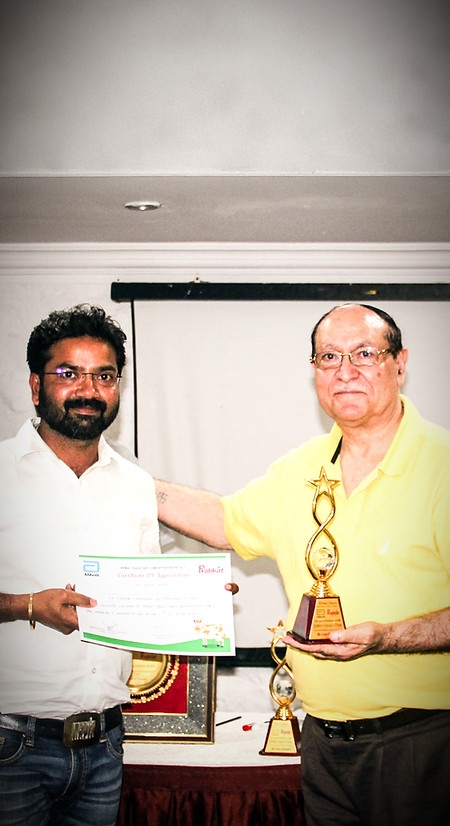
This doctrine culminates in a radical re-framing of the employer-employee relationship. For Kashyap, a job interview is no one-way evaluation but a bilateral assessment. He does not see employment as a subordinate role but as a "partnership" that requires a deep alignment of aspirations between the individual and the organization. To him, every position is not merely a mundane job. Kashyap is searching for a platform where his disruptive, system-building talents can be effectively deployed. This requires a partner who understands and values his approach, not an employer who expects unconditional compliance. The decision to join an organization is therefore a mutual one, a compact based on a shared vision, with no unilateral acceptance of terms.
"You are not the only one taking my interview.
I'm also trying to read you, whether you are the organization or you are the people I should be working with you."

(-1; 0; +1)
The development sector is often defined by a false binary. On one end lies pure philanthropy, driven by mission, lacking a sustainable business model. On the other lies pure commerce, driven by profit but disconnected from ground-level social realities. Love Kashyap has built his career in the elusive space between these two poles: the "missing middle." This is the operational theater where complex problems live and where sustainable solutions are neither reduced to charity nor are they entirely commercial. Being misunderstood is a key feature of this territory. He is often perceived as "too business for NGO, and too NGO for business." For Kashyap, this is not a sign of representing a flawed position. It is validation that he is occupying the only ground where real, hybrid solutions can be built.
His worldview is captured in a metaphor of relativity. He describes the pure business mindset as "+1" and the pure NGO mindset as "-1." By positioning himself at the "zero" point of pragmatic realism, he inevitably draws criticism from both extremes. The "+1" side views his insistence on understanding farmer realities and social impact as a distraction from the bottom line, labeling him "too negative." The "-1" side views his focus on business principles as a betrayal of the social mission, labeling him "too positive." This constant friction is not a problem to be solved. It is the defining characteristic of his default. He rejects the idea that "Extremes can't solve the problem" and instead operates from a synthesized center.
From this central vantage point, Kashyap's method is to architect a "collaborative polygon." This is a model of stakeholder alignment that rejects zero-sum thinking. The goal is not to convert a corporation into an NGO or force farmers to think like executives. It is to identify each party's distinct, often competing, interests and design a solution where all benefit, albeit for different reasons. A corporation will not engage on an NGO's terms, and farmers will not adopt a practice that does not serve their interests. The work of the architect in the missing middle is to find the precise intersection of these interests and build a sustainable, mutually beneficial system upon it. This is a sober approach that replaces ideological purity with multifaceted solutions.
"Extremes can't solve the problem."

A 5% Premium
Trust is the most valuable and fragile currency in any system, particularly in communities with a long history of exploitation. For the farmers Love Kashyap works with, skepticism is not a personality trait but a rational, learned survival mechanism. He notes that they "have been cheated many times", creating a significant "trust deficit" that is the single greatest barrier to implementing any new system, no matter how beneficial it may seem in the long run. A brilliant long-term solution is worthless if no one is willing to take the initial risk to adopt it. Kashyap’s methodology, therefore, is not just about designing a better system, but about architecting a process for building the trust required to make that system viable.
His core principle is that "institutionalization has to be backed with incentivization". A new system or institution cannot be imposed by force or persuasion alone. It must be accompanied by a tangible, immediate, and compelling reason for stakeholders to participate. This is not a bribe or a permanent subsidy. It is a strategic bridge, a "short-term value" designed to overcome the initial barrier of distrust and allow the much larger "long-term value" to take root. This model acknowledges that a promise of future benefit is an abstraction, while a present-day incentive is a concrete demonstration of good faith and shared interest. It directly answers the farmer's unspoken but critical question: What is in this for me, right now?
This architecture was tested and proven in a project to produce high-quality, antibiotic-free milk for infant formula. The long-term value for farmers was a potential 100% increase in milk production, but this was an abstract promise. The immediate challenge was their skepticism: "Why should I trust you?". Kashyap’s solution was to build an incentive bridge: a guaranteed bonus of one rupee per liter for compliant milk, a 5% premium at the time. This small, immediate reward was not the ultimate goal, but a tangible, low-risk "green shoot" proved the system was designed for their benefit. The incentive created a powerful feedback loop. It encouraged adoption, which in turn revealed the system’s massive long-term benefits. Within two years, the initial one-rupee bonus became "irrelevant" compared to the enormous gains in production. The short-term incentive had successfully served its purpose: it had bought the time and participation necessary to build unshakable trust.

“The long-term value is 10x higher than the short-term, but the problem is the trust.
Why should I trust you?”

Tech-Nolutionism
The allure of technology dominates the modern innovation landscape as a panacea for complex social problems. A well-designed app or platform is often mistaken for a complete solution, a bias Love Kashyap identifies as a critical and recurring strategic error. His experience has forged a sharp critique of this tech-solutionism. He argues that many ventures fail because their founders solve the easier, more visible part of the problem while fundamentally misunderstanding the larger, more difficult context in which it exists. This philosophy champions a deep respect for the messy reality of implementation over the clean logic of a technologically elegant business plan.
Kashyap illustrates this failure mode with a powerful heuristic. The visible, digital part of a solution, he suggests, is often only "30% of the problem." The far more significant "70% of the problem" consists of the invisible, complex, and often tedious work of physical logistics, on-the-ground adoption, and the dynamics of human behavior. This framework was crystallized during his time reviewing an ag-tech business plan that he assessed as being "50 times away from reality." The plan was built on the belief that technology could solve everything with the "click of the button," but it completely ignored the immense physical and social infrastructure required to make the technology viable.
This leads to what Kashyap sees as a common founder's fallacy. He observes that many entrepreneurs begin by "loving the problem" but soon become infatuated with the "startup they created." This shift is subtle but critical. When the solution becomes more important than the problem, market resistance is interpreted as the customer's failure, not the product's. Founders begin to believe that their "customers are foolish" for not understanding the value of their solution. In reality, Kashyap argues, the customers are not foolish. The solution has simply failed to demonstrate its value in their world. He believes the root cause is a failure to invest enough time to truly "understand the problem" before "repackaging a solution" from another market. For him, a solution that does not account for the messy 70% of reality is not a solution at all. It is just a well-packaged hypothesis.
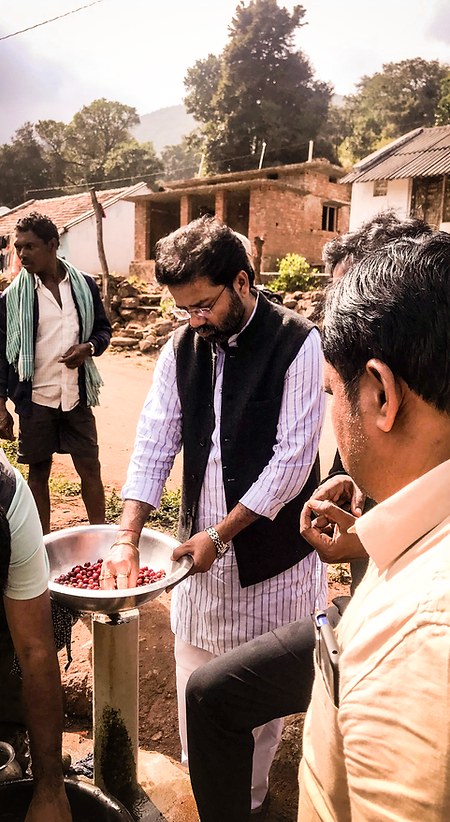
“People are actually not investing enough time to understand the problem, right? And then create the solution. What they are actually doing is repackaging a solution in some other market.”

Either Side
Love Kashyap's career is an exercise in navigating paradox. How can a leader with "no middle ground" in his personal principles be the chief architect of the "missing middle" in his professional strategy? The answer lies in understanding that one is the foundation for the other. His entire operating system is built on an uncompromising ethical core that gives him the stability to work in the deeply compromised, nuanced space between pure commerce and pure philanthropy.
His "principled rebellion" is not an act of chaos but the engine of his methodology. The intellectual license allows him to reject the false binaries that trap many organizations. By refusing to align with either the "+1" of pure business or the "-1" of pure social work, he occupies the pragmatic "zero" point from which a "collaborative polygon" of shared interests can be constructed. From this central position, he can build a sophisticated "architecture of trust," using tangible, short-term incentives as a bridge to long-term systemic change, a feat that requires the trust of all stakeholders. His sharp critique of tech-solutionism is the natural extension of this philosophy: a deep respect for the messy, 70% reality on the ground that can only be gained from operating in the middle of it.
Ultimately, Kashyap is revealed as a pragmatic optimist. His career is a testament to the belief that even in a world of fabricated stories and broken systems, a single individual can force a reckoning. He willingly accepts the personal risk of being a "troublemaker" because his ultimate faith is not in the systems he seeks to disrupt, but in the inherent goodness of the people within them.
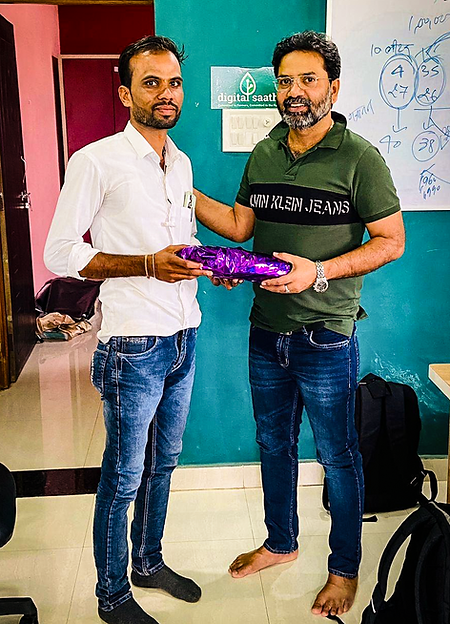
"So, yeah, I'm… today, I boast of myself as the honest guy, but tomorrow, if I become dishonest, there would be nobody more dishonest than me. So, I don't like to be in the middle, either this side or that side."
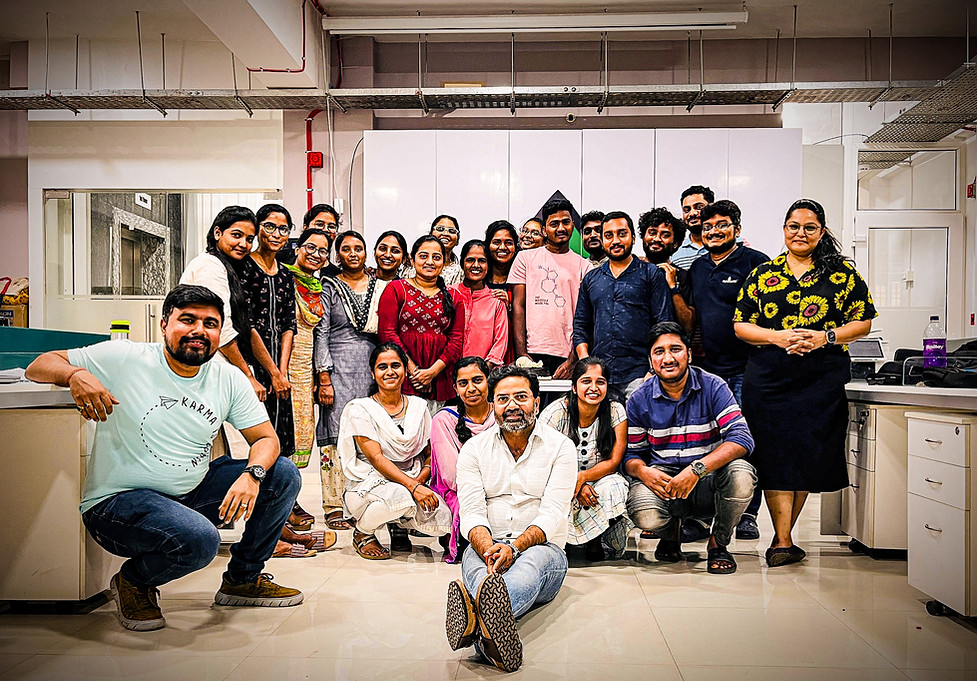
What I learned from Love Kashyap
-
Constructive disruption is a founding principle. A leader’s value can lie not in maintaining order but in deliberately dismantling outdated systems to create new ones from the ground up.
-
Employment is a bilateral partnership. The traditional employer-employee hierarchy is flawed. A truly effective professional relationship is a "partnership" of equals in which both parties vet each other to ensure a mutual alignment of aspirations.
-
The "missing middle" holds the strategic advantage. The most effective, sustainable solutions often lie in the pragmatic space between pure philanthropy and pure commerce, which requires a high tolerance for being misunderstood by both extremes.
-
Incentives are a bridge to trust. In skeptical environments, trust cannot be demanded. A small, tangible, short-term incentive can serve as a powerful strategic bridge to secure the buy-in needed for a much larger, long-term systemic change.
-
Technology is only 30% of the solution. The majority of any real-world challenge lies in the messy "70% problem" of logistics, human behavior, and on-the-ground adoption, a fact that tech-solutionism dangerously ignores.
Comprehension Challenge: Love Kashyap
Philosophy
Love Kashyap’s philosophy is a masterclass in pragmatic disruption. He operates in the "missing middle" between social good and business logic, architecting hybrid solutions that pure-play organizations cannot. His success hinges on building a "collaborative polygon" of aligned interests and using incentives as a bridge to overcome deep-seated trust deficits. This challenge tests your ability to deploy this disruptive, synthesizing mindset within a traditional corporate structure.
The Scenario
Imagine 'Riya,' the new Chief Innovation Officer at a large, established Indian food conglomerate. The company's philanthropic foundation runs a well-funded but stagnant farmer support program. It provides aid but has created dependency, showing minimal long-term impact on farmer livelihoods. It is a classic "NGO mindset" initiative, which Kashyap calls a "-1" position.
Riya’s analysis shows an opportunity to transform this program into a powerful, profitable, and truly impactful hybrid model. She proposes a radical overhaul: phase out the direct aid and instead build a new, dedicated supply chain for a niche, high-value, climate-resilient crop that the company's core business, the "+1" position, can use in its premium product lines. Her plan involves using short-term incentives and guaranteed buy-back contracts to get farmers on board, similar to Kashyap's dairy project.
The plan meets immediate internal resistance. The long-serving head of the foundation sees it as a hostile, profit-driven takeover of a charitable mission. The CFO is skeptical of the ROI and the immense risk of building a new supply chain from scratch. Riya is seen as "too business for the NGO" and "too NGO for the business."

The Task
Drawing on Love Kashyap's philosophy, what is Riya's imperative?
-
How can she reframe her disruptive proposal not as a conflict, but as the architecture of a "collaborative polygon" that serves the foundation's mission, the CFO's financial targets, and the farmers' need for sustainable prosperity?
-
How should she design the "incentive bridge" to overcome the initial trust deficit from farmers and demonstrate immediate value to both them and the company?
-
Develop a strategic argument for Riya that justifies her "constructive disruption" to a risk-averse corporate culture. How do you, as the architect of the missing middle, prove that the "zero" point is the most valuable position?