


Spiritual Guidance
What compels established leaders to pivot from the quantifiable certainties of technology to the evolving metrics of environmental stewardship? Jangoo Dalal, a veteran of three decades in tech leadership at Cisco, Avaya, and E-link, made this transition. This shift was not a strategic response to a burgeoning market. A personal encounter with an unseen environmental reality catalysed it.
Dalal's path to sustainability deepened in the early 2000s. His family's relocation from Bangalore, India, to Singapore, a city renowned for its cleanliness, presented an unexpected paradox. His young son, previously healthy in Bangalore, began suffering chronic viral colds and breathing issues within a month of moving to Singapore. This defied intuitive understanding. Singapore was perceived as a healthier environment. The prevalent assumption about a city's environmental quality did not align with his son’s declining health. The discrepancy between public perception and personal reality raised questions.
Consulting a leading pediatrician revealed the unseen culprit: the constant, pervasive use of air conditioning. The closed, circulating air in homes, schools, buses, and public transport meant continuous exposure to recirculated viruses, offering no respite for the respiratory system to heal and improve. This stark contradiction of a "clean" city inadvertently creating health issues through its climate control infrastructure became an unexpected "tipping point" for Dalal. He began a deeper inquiry into how environmental factors, often hidden, directly affect human well-being. The incident made him question: Is what appears clean healthy, or are there hidden systems contributing adverse effects? This personal vulnerability ignited a driven professional mission and transformed an abstract interest in environmental issues into an imperative for action.
The conventional narrative of a career shift often focuses on market dynamics or professional ambition. Dalal's experience, however, underscores the influence of personal resonance. His deep-seated interest in environmental issues, present even during his corporate career, gained an undeniable force through his family encounter with a seemingly paradoxical aspect of human-designed nature. This individual's "passion about the planet, about sustainability" became a core driver for his entrepreneurial aspirations. He recognized the opportunity to combine this passion with his strength in delivering business outcomes for large and mid-sized enterprises. This combination became central to his new venture.
The realization that environmental impact is not always overt, but can manifest subtly and still critically, reshaped Dalal's understanding. It highlighted the need for a more nuanced perspective on "cleanliness" and "health." This deeper appreciation for the unseen mechanisms of environmental influence propelled him to seek solutions that address underlying systemic issues, rather than apparent symptoms.

"I always had a personal interest in environmental and sustainability issues, and over time, through a few personal experiences, those got a little stronger."


The Indian Grit
While transitioning to renewable energy is often presented as a straightforward, cost-effective choice for corporations, Manglani’s work reveals a more complex reality. Achieving ambitious targets like RE100 is not a procurement decision. It is an engagement with rudimentary systemic challenges. She identifies a fundamental conflict: the state-owned distribution companies view corporate shifts to independent renewable power as a direct "revenue loss". This creates a political barrier. These entities erect "regulatory constraints" to protect their legacy models, making a complete transition to renewables difficult. The problem is not just one of corporate will but of entrenched political and economic interests. A core technical challenge compounds this internal friction. Renewable sources like solar and wind are "very intermittent in nature". Manglani explains that injecting high volumes of this fluctuating power into the national infrastructure "causes the instability of the grid". This technical reality makes advanced technologies like Battery Energy Storage Solutions (BESS) a non-negotiable component of a functioning renewable grid. Storage is not an accessory. It is the enabling technology required to support the grid during "non-solar hours" and to balance the intermittency that threatens the system. The path to a green grid depends on a technological leap that solves the inconsistency problem.
This interplay of domestic policy and technical necessity is further shaped by geopolitics. Manglani’s perspective is grounded in a pragmatic doctrine of protectionism. She asserts that "every country, every government needs to safeguard its own industry". She views policies that protect domestic manufacturing not as trade barriers, but as essential acts of building national resilience. She cites India’s "conscious call" to impose duties on Chinese solar panels as a necessary step to motivate and "support Indian manufacturers". This directly responds to China's long-term strategy of using economies of scale and state support to become a "behemoth" in the solar industry. This dynamic reveals that the energy transition is also a theater of industrial strategy, where nations compete to control the foundational technologies of the future economy. Developing India’s domestic capacity is an economic goal and an act of securing its sovereignty, ensuring it is not dependent on a geopolitical rival for the infrastructure of its future energy. Manglani’s work as an executor requires her to navigate these intersecting layers of technology, domestic policy, and international strategy, proving that implementing a single solar project is an act that reverberates through the geopolitical landscape.

"Every country, every government needs to safeguard its own industry."


Spiritual Guidance
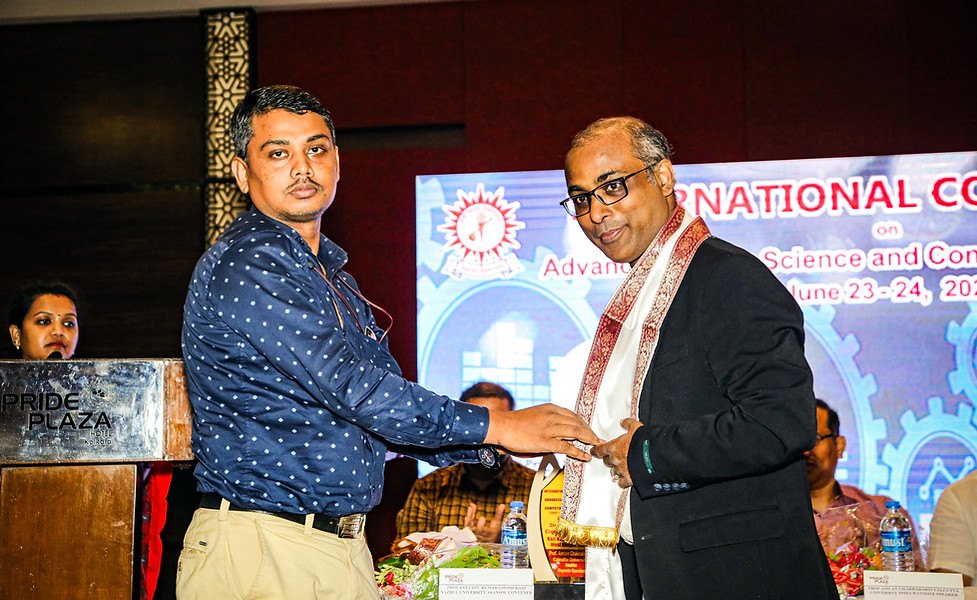
Dr. Arghya Majumder’s career presents a tangible paradox. For over two decades, he operated within the steel industry, a world of hard material and uncompromising industrial logic. Yet, his foundational worldview was forged in the philosophical atmosphere of a Ramakrishna Ashram, a place dedicated to shaping good human beings through spiritual practice. The immediate question is one of coherence. How does a mind steeped in non-materialism navigate and lead within an industry that is, by its nature, materialistic? Is there an inherent conflict that forces a leader to compartmentalize their values, or can one system inform the other?
Majumder’s professional life appears to be a practical application of his spiritual code, an attempt to bridge these seemingly irreconcilable domains. His work rejects the binary that pits industry against philosophy. Instead, it suggests a more complex architecture where one provides the ethical realm for the other to rise. The challenge is not choosing between spirit and steel, but discovering the principles that allow them to function as a single, coherent system. His journey offers guidance for leaders grappling with a similar divide: translating deeply held personal convictions into a viable and ethical operational strategy in a world that often demands they be kept separate. The tension is the source of his secular model.
“You have put me in a dilemma, because my upbringing is something like, in a philosophical atmosphere, where Ramaprishna Asram teaches how to be good human beings, you know?”


Intentional Friction
The modern business culture exercises the elimination of friction. It worships speed and lionizes scale, measures value in the velocity of growth and the efficiency of execution. The prevailing doctrine demands that any obstacle to the bottom line must be optimized or removed, regardless of whether it’s a process, a person, or a difficult question. A leader’s worth is often judged by their ability to make fast things move faster.
Shailja Sachan’s professional philosophy questions this mandate. She built an operational model that does not seek to eliminate friction but to engineer it. Her work is a conscious act of deceleration, deliberately introducing checks and questions into a system designed for unchecked momentum. She describes herself as a "chronic over-thinker when it comes to design and development". This declaration is not a confession of inefficiency but a deliberate strategy. She reframes overthinking as "really deep thinking," a necessary process for asking uncomfortable questions about "who's left out" and "what's the hidden cost".
Sachan challenges the systems "built for speed and scale" by proposing a radical alternative. In the human-centric ecosystems where she operates, sustainable value is not cheated. It is cultivated. Her work attempts to design "tools and systems and narratives that translate slowness into value". This positions her methodology as a counter-narrative to conventional venture-backed growth. It is a model built on the conviction that the most resilient outcomes emerge not from speed, but from depth.

"I'm a chronic over-thinker when it comes to design and development, and I see that, when you're overthinking design and development, it's not overthinking, it's just really deep thinking."


The Constructive Disruptor
Most leaders are tasked with maintaining or optimizing existing systems. Their value lies in creating predictability and order. Love Kashyap’s professional philosophy is built on the opposite premise. He is a leader actively drawn to chaos, thriving in what he calls an "unorganized setup". He sees a broken system not as a liability to be fixed, but as an opportunity to build something new from first principles. This instinct places him firmly within a three-part leadership typology he learned from a former boss: there are those who establish a business, those who run it, and those who wind it down. Kashyap is unequivocally an establisher, a founder-archetype driven to chart "unsealed water" rather than navigate known territory.
Kashyap is less drawn to managing a finished product and more about the messy, generative creation process. He is not a "follower kind of person". He describes his default mode as “questioning things”, if necessary, dismantling established methodologies that no longer serve a logical purpose. This approach is deliberate. Kashyap makes a critical distinction: his disruptions are "constructive in nature". This reveals a person whose core identity is not defined by adherence to a pre-written script but by the intellectual and accurate rigor required to write a new one. What kind of operating system emerges when a leader’s primary instinct is not to follow the rules, but to create them?
"Every time growth is not good, cancer is also growth."


"Success of growth is not only about upward growth. It's downward growth as well, which is like the depth."
Vertical Limits
The modern business culture, particularly in technology and social impact, is a religion of upward growth. It worships scale, speed, and the immediate visibility of its metrics. Success is measured by the velocity of ascent, a relentless climb where the primary virtue is momentum. The prevailing doctrine demands a focus on the visible canopy: the number of users, the funding rounds, the headline-grabbing announcements. The health of the roots is an afterthought, a detail to be managed later, if at all.
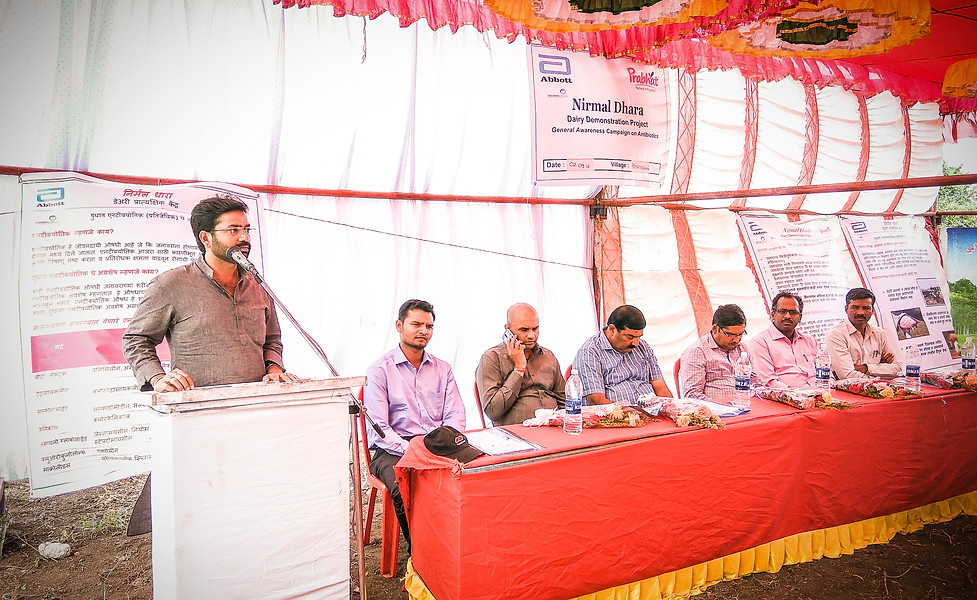
Apurva Bhandari’s professional philosophy rebels against this mandate. His entire operating system is built on a counterintuitive principle borrowed from the natural world. “Success of growth is not only about upward growth,” he states. “It’s also downward growth, which is like the depth.” This metaphor is the core of a resilient and potent doctrine. Downward growth is the slow, often invisible, and unglamorous work of building a fierce foundation. It is the cultivation of deep roots: resilient systems, authentic community trust, and a perfected operational model. It is a philosophy that values stability over speed and substance over spectacle.
This doctrine questions a sustainability sector that he saw valuing the performance of planting millions of trees over the complex, long-term work of ensuring their survival. Bhandari himself devoted his career to upholding this principle with unwavering discipline. Over the years, he proved that the most powerful and sustainable form of upward growth is only possible after a long, patient period of conscious downward development.

Our Interviewees on the Record.

Amplify Your Impact:
Experience Albert's NoSmalltalk
Albert's NoSmalltalk session was exceptionally impactful. The refreshingly no-nonsense, heart-to-heart talk authentically brought out ColoredCow's story of building a tech ecosystem in the Indian hills. His approach ensures natural conversations, capturing your true narrative. I believe this helps amplify impact. Highly recommend sharing your story with Albert to inspire others!


