
The Parent Effect. Teach One get Two for Free

My NoSmalltalk session with Ratnesh Mathur
Conventional schooling largely operates on a delegation model: parents entrust the institution with their child's education during school hours. Involvement is often peripheral – homework checks, parent-teacher meetings. Aarohi Life Education, as detailed by Ratnesh, fundamentally rejects this separation. The model doesn't just invite parental involvement; it appears systemically dependent on it. Analyzing Ratnesh's description reveals parental engagement not as a desirable add-on, but as an integral, non-negotiable component designed to foster parallel growth in both child and parent, acting simultaneously as a powerful learning mechanism and a crucial filtering process for entry into their ecosystem.
Parent Transformation as a Design Feature, Not a Side Effect
Ratnesh explicitly stated that parents often report profound personal transformation through Aarohi, sometimes exceeding that of the child: "almost in every case, the parent would say that... It changed me or grew me... I evolved more as a parent after being part of this journey". This isn't presented as an unexpected bonus but as an inherent outcome of the model's structure. The system challenges parents to rethink their relationship with their child, moving away from a hierarchical, "top down" dynamic ("I'm your parent, and you are down there like a little kid") towards one of mutual respect and parity ("You are one to one," regarding children as "equal individuals"). This reframing appears essential for the child-led learning philosophy to function; if parents don't shift their perspective, their interactions outside the Aarohi space could undermine the autonomy fostered within it.

Shared Reflection Tools: Engineering Parity and Mutual Growth
The mechanism for achieving this parallel growth involves shared practices, not just separate reporting. Ratnesh highlighted the use of common reflection tools, like the "Brakes and Accelerators" graphic organizer. Crucially, these tools aren't just for the child; the entire family unit engages simultaneously: "It's not only the children who will be sharing... All 3 of you will make for yourself your graphic organizers... and each one will make theirs and then share with each other". This forces parents onto the same reflective playing field as their children, acknowledging that adults also face obstacles ("breaks") and possess drivers ("accelerators"). It dismantles the "Wisdom holder is only the... elderly person" paradigm, creating an "equitable environment within the family" where learning and feedback flow multi-directionally. This shared vulnerability and analysis appear designed to build the mutual understanding necessary to support a child navigating a self-directed path..
High Investment as a Strategic Filter
While powerful, this requirement for deep parental engagement creates a significant barrier. Ratnesh candidly acknowledged that this deters many potential families: "a lot of people also don't join because they think Oh, my goodness! Here I have to invest myself also". From a purely analytical standpoint, however, this barrier functions as a highly effective filter. The Aarohi model demands consistency between the learning environment and the home environment regarding principles of autonomy, respect, and self-reflection. Families unwilling or unable to commit to this level of personal engagement and transformation are unlikely to thrive within, or fully support their child within, such a system. The "scare and... apprehension" surrounding leaving the conventional system is compounded by the demand for active parental participation. Therefore, the families who do join are self-selected for a high degree of commitment to the philosophy, increasing the likelihood of the model functioning effectively for both child and parent.
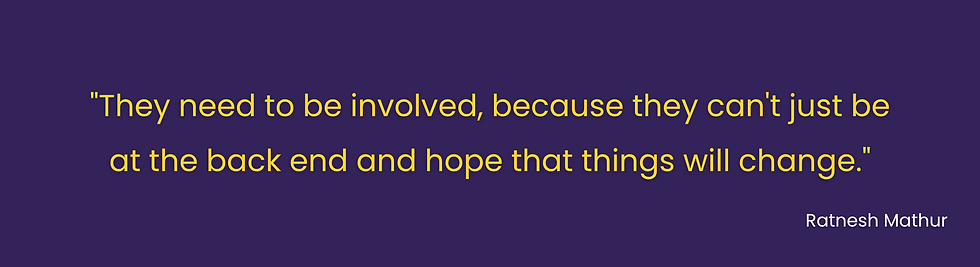
The Aarohi model, as described by Ratnesh, thus integrates parents not merely as stakeholders but as active participants and co-learners within the educational ecosystem. This deep involvement is positioned as essential for fostering the necessary mindset shift in both generations and functions as a crucial mechanism for ensuring philosophical alignment. It transforms the concept of parental involvement from passive oversight to active, shared, and often transformative, engagement – a demanding but systemically necessary component of their open learning approach.

5 lessons with practical value


Comments