


Vertical Limits
The modern business culture, particularly in technology and social impact, is a religion of upward growth. It worships scale, speed, and the immediate visibility of its metrics. Success is measured by the velocity of ascent, a relentless climb where the primary virtue is momentum. The prevailing doctrine demands a focus on the visible canopy: the number of users, the funding rounds, the headline-grabbing announcements. The health of the roots is an afterthought, a detail to be managed later, if at all.
Apurva Bhandari’s professional philosophy rebels against this mandate. His entire operating system is built on a counterintuitive principle borrowed from the natural world. “Success of growth is not only about upward growth,” he states. “It’s also downward growth, which is like the depth.” This metaphor is the core of a resilient and potent doctrine. Downward growth is the slow, often invisible, and unglamorous work of building a fierce foundation. It is the cultivation of deep roots: resilient systems, authentic community trust, and a perfected operational model. It is a philosophy that values stability over speed and substance over spectacle.
This doctrine questions a sustainability sector that he saw valuing the performance of planting millions of trees over the complex, long-term work of ensuring their survival. Bhandari himself devoted his career to upholding this principle with unwavering discipline. Over the years, he proved that the most powerful and sustainable form of upward growth is only possible after a long, patient period of conscious downward development.
"Success of growth is not only about upward growth. It's downward growth as well, which is like the depth."

The Chipko Downpayment

Apurva Bhandari’s doctrine of downward growth was not an intellectual discovery made in a boardroom. It is an inherited philosophy, a principle absorbed from the soil of his childhood. He was born and raised in the Himalayas, the land that gave rise to the Chipko movement, a seminal, community-led environmental protest that has become a global touchstone for grassroots ecological preservation. This geography is a biographical detail fueling the source code of his operating system. His worldview was shaped by a legacy of authentic, non-performative environmentalism, a stark contrast to the world of vanity metrics he would later encounter and reject. The Chipko philosophy, where local women physically embraced trees to protect them from loggers, represents a non-negotiable, somatic commitment to the environment. This underlying paradigm informs his later critique of disconnected, digital-only environmentalism.
This inheritance was geographical and familial. His father was a plant pathologist who ran a "lab to land" project, a man dedicated to translating scientific theory into tangible agricultural outcomes. This represents a deep-seated belief in applied, practical science that solves real-world problems for real communities. His mother was a school principal cherished for her dedication to tree planting, embedding the value of environmental stewardship into the community's next generation. Bhandari grew up in an ecosystem where environmental work was not a corporate social responsibility initiative. It was a fundamental, integrated part of science, education, and community life. These two streams, his father's pragmatism and his mother's community focus, form the twin pillars of his teachings. He inherited a belief that a solution must be both scientifically sound and socially embedded to be of value.
This origin makes his subsequent journey significant. His early career was a conscious move away from this inheritance, a "job hopping" period through the seemingly disconnected worlds of oil and gas and enterprise technology. This phase can be understood as a necessary diversion. It was a journey into the heart of the extractive, scalable, and technologically driven systems he would later need to understand to build a viable alternative. It was a period of gathering the tools and language of the modern business world, a world far removed from the community-led principles of Chipko. This departure was an unconscious preparation to fulfill his mandate in a new era, a synthesis of ancient values with modern mechanics.
"My mom was a school principal... She has won awards for planting the largest number of trees."
The Search for Survivors

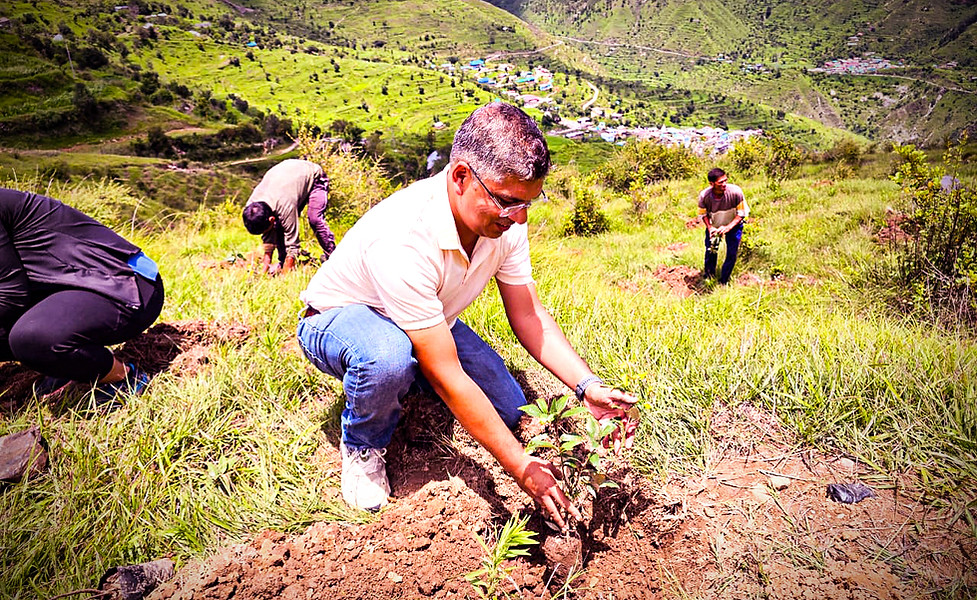
In any system, the choice of a primary metric dictates behavior. For years, the reforestation sector was driven by a simple, highly visible, and ultimately flawed metric: the number of trees planted. This figure is easy to market and provides the immediate gratification of a large number, perfect for headlines and world record attempts. It is, however, a measure of activity, not impact. Apurva Bhandari’s turning point came from a rigorous on-the-ground investigation of the consequences of optimizing for this single metric. He saw a system that had become exceptionally good at the performance of environmentalism but had lost sight of the actual goal.
The result of this flawed focus was a systemic failure of purpose. When the goal is simply to get saplings in the ground, there is no built-in incentive to ensure their long-term survival. The very structure of the initiatives was designed for a short-term, visible win. Bhandari's investigation revealed the stark outcome of this philosophy. When he returned to the sites of these record-breaking events a year later, he discovered a near-total ecological failure. He found that "not even 1% trees are surviving." This figure was not just a logistical shortcoming. It was the empirical proof that the entire operating philosophy of the sector was broken. It was a system that excelled at generating a good story but failed in its core mandate.
His solution, therefore, was not an incremental improvement. It was a revision of the goal itself. He chose not to plant more trees faster. Instead, he introduced a new, non-negotiable metric: accountability. This led to his "Survival Rate Doctrine," a philosophy built on the conviction that the only number that matters is the number of trees that live. This doctrine represents a radical shift from a logic of performative action to long-term responsibility. It is not just a new Key Performance Indicator. It is a new ethical framework. The doctrine insists that the responsibility of planting a tree does not end when the shovel is put down. It extends for years, requiring a durable system of care and a commitment to the entire lifecycle of the organism.
To enforce this new doctrine of accountability, Bhandari turned to a tool he had mastered during his time away from his roots: technology. His model uses geotagging, satellite imagery, and transparent data platforms not as the primary product, but as the essential tools for building trust and verifying outcomes. This is a critical distinction in his model. He did not build a tech company that happens to plant trees. He built a reforestation company that uses technology to solve the sector's core accountability problem. In his system, technology is the enabler of trust. It is the mechanism that makes the survival rate transparent and verifiable, giving donors and partners a clear line of sight to their actual impact. This approach directly rejected the opaque, vanity-driven metrics that defined the industry.
"So all those Guinness Book of World Records, all those things were happening... but if you go back to the ground after a year's time, there would be not even 1% trees surviving."
The 10 Year Return on Investment
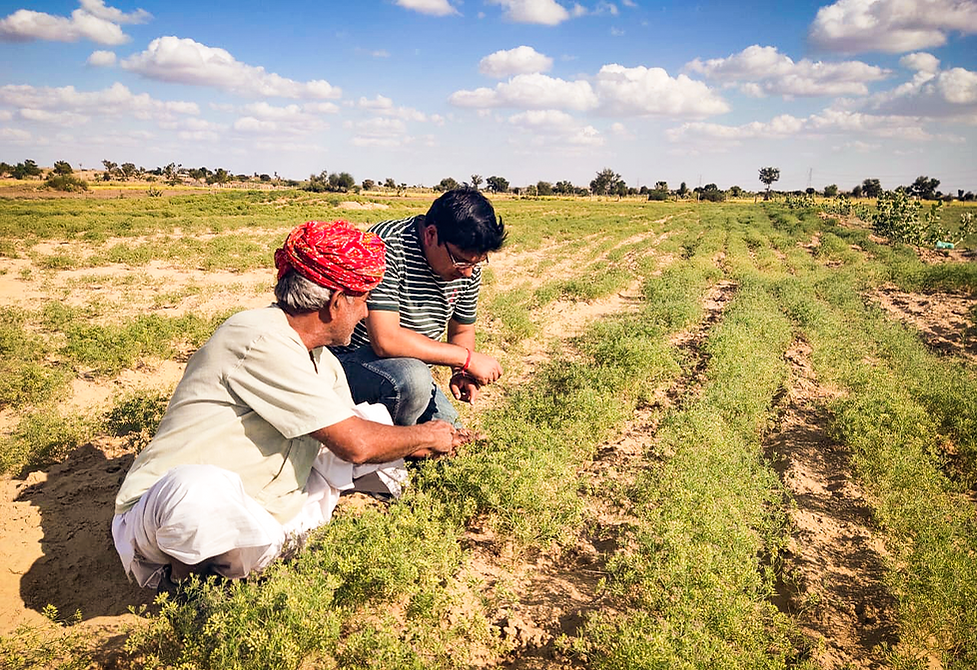
Bhandari’s critique of the reforestation sector was pragmatic. He applied his approach of downward growth to construct his organization with rigorous and patient discipline. The central data point of his company's journey is counterintuitive to the modern startup era: the first million trees took eight years to plant. In a world that measures success in quarterly sprints, this timeline indicates failure or inefficiency. For Bhandari, however, it was the entire point. It was the necessary and deliberate period of building the deep, resilient root system from which all future growth would spring.
Those eight years were a conscious investment in the required work that the performative side of the sector consistently ignored. This was the phase of downward growth in practice. It involved creating and perfecting the technological roots, the geotagging and monitoring systems that would form the bedrock of his accountability promise. More importantly, it involved building the social roots. This meant establishing authentic, trust-based relationships with local communities across India, a process that required an understanding of the local context and a rejection of transactional, top-down implementation. It was the patient work of turning his Chipko inheritance into a scalable operational model. Finally, it was about building the operational roots, the complex logistical and agricultural systems needed to ensure a responsible survival rate.
This methodology rejects the pressure for premature scale. A conventional venture-backed company is forced to prioritize upward growth, chasing a high number of planted trees to secure its next funding round. Bhandari’s model, by contrast, valued stability over speed and substance over spectacle. It was a conscious choice to perfect the system at a smaller scale before attempting to replicate it. This long period of downward growth was an investment in resilience, an architecture designed to withstand the inevitable challenges of scaling a technologically complex and human operation.
The validation of this doctrine is what happened next. The organization could scale dramatically after eight years with the established technological, social, and operational roots. It planted the next 14 million trees in just two years. This was the inevitable harvest of his design, the foundation he had so carefully cultivated. This explosive upward growth was only possible because of the long, patient, and disciplined period of downward growth that preceded it. This result indicates that the most potent and sustainable development is not the fastest, but the most deeply rooted.
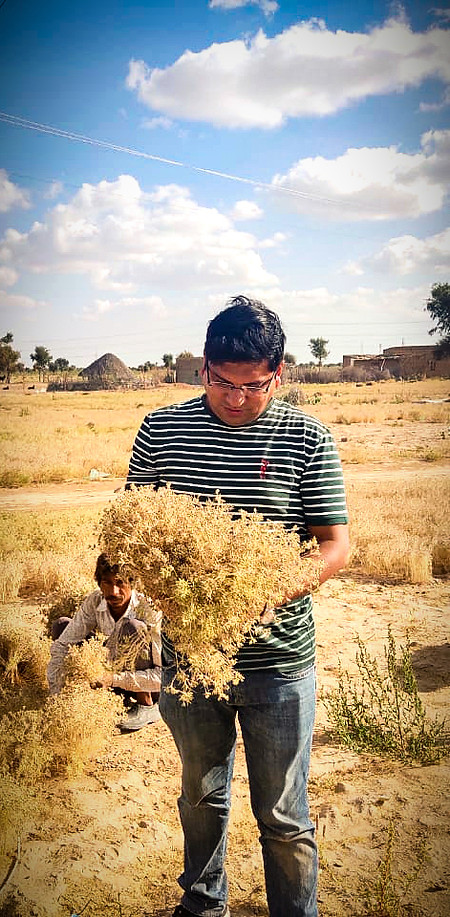
"The first 1 million trees took us 8 years to do that... But after that, in the last 2 years, we have done 14 million trees."
The Final Harvest
Apurva Bhandari’s lesson on downward growth extends beyond organizational strategy into the more complex and challenging realm of human consciousness. His analysis concludes that the ultimate root of the environmental crisis is not a failure of technology or policy, but a failure of the human mindset. For him, the necessity of downward growth is the internal work of changing how we think and act. The final frontier of sustainability is not an external project. It is the challenging, internal process of unlearning the deeply ingrained habits that created the problem in the first place.
He illustrates this with the example of pollution driven by "religious sentiment." He describes people throwing offerings and other materials into rivers as an act of devotion. This behavior is not malicious but is "hard-coded" by generations of cultural and spiritual practice. A purely scientific or legal solution, such as a fine or an educational pamphlet, is bound to fail because it does not address the deep-seated belief system that drives the action. This highlights the ultimate complexity of the challenge. How do you re-engineer a behavior intrinsically tied to a person’s identity, faith, and sense of community?
Bhandari's proposed solution is a mandate for "unlearning." This is not a passive process of forgetting, but a conscious and deliberate effort to question and dismantle our own automatic, destructive habits. This applies not just to specific cultural practices but to the broader, global culture of consumption. It calls for individuals to re-root their identities in a more conscious and less consumptive relationship with the environment. This is the deepest and most difficult form of sustainability work because it requires a fundamental shift in our own source code.
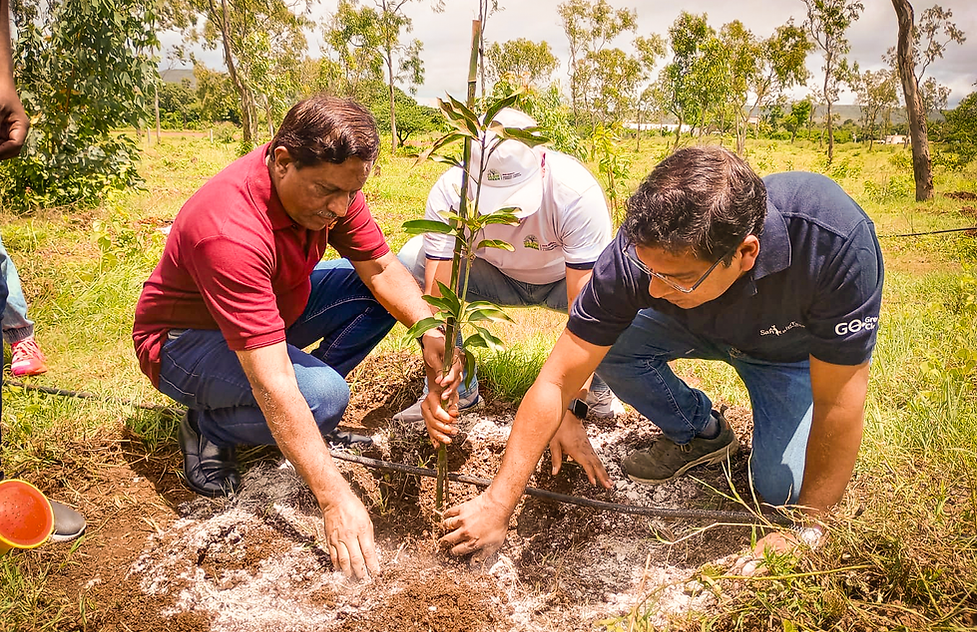
This brings Bhandari's journey full circle. His final validation came when he received an award from a key leader of the Chipko movement. This moment was a personal honor, and to him, the confirmation that his doctrine worked. The inheritor of the Chipko legacy, who had left the Himalayas to conquer the enigmas of the modern world, was now being recognized by the source of a legacy close to his heart. It was proof that his synthesis of ancient values, community-driven respect for nature, with modern mechanics, technology-driven accountability, had been successfully integrated. It was the final harvest of a life spent cultivating deep roots.

"It's all about unlearning those hard-coded things... I think unlearning is a way forward for all of us."

What I learned from Apurva Bhandari
-
The Doctrine of Downward Growth: The most resilient form of success comes from prioritizing the slow, often invisible work of building a deep foundation over the pursuit of rapid, visible scale.
-
The Power of Inheritance: A leader’s most potent philosophy can be an inherited one, a synthesis of ancestral values and place-based wisdom with modern, technological tools.
-
The Accountability Mandate: In any impact-driven work, the only metric that matters is the final outcome, not the initial performance. A "survival rate" is a more honest measure of success than a vanity metric.
-
The 10-Year ROI: The most powerful upward growth is only possible after a long, patient period of downward development. Substance must be perfected before scale is attempted.
-
The Unlearning Imperative: The ultimate root of the sustainability crisis is not technological but behavioral. The most difficult and necessary work is the internal process of unlearning our "hard-coded," destructive habits.
Comprehension Challenge: Apurva Bhandari
Philosophy
Apurva Bhandari’s doctrine of "downward growth" is a direct rebellion against the modern startup culture’s obsession with speed and scale. He argues for the strategic necessity of building a deep, resilient foundation before chasing visible metrics. This challenge tests your ability to deploy this counter-intuitive philosophy in an environment that demands immediate, exponential growth.
The Scenario
Imagine ‘Rohan,’ the founder of a well-funded social impact startup that provides digital literacy skills to rural women. The startup is a darling of the impact investment world, having scaled to one million users in its first 18 months. The board and investors are thrilled with this "upward growth" and are pushing for an aggressive expansion to ten million users to secure the next, larger funding round.
Rohan’s internal audit, however, reveals a stark reality. While the user numbers are impressive (the vanity metric), the actual impact is shallow. User engagement is low, and a post-program survey shows that less than 10% of the women have successfully used their new skills to gain employment or increase their income. This is the "survival rate." The organization is excellent at acquiring users but is failing to create lasting value.
The board wants to pour the next round of funding into marketing to hit the ten-million-user target. Rohan believes the company must halt its upward growth and focus on downward growth: redesigning the curriculum, building a mentorship system, and establishing community partnerships to ensure real-world outcomes. This would be a slow, expensive, and unglamorous process that would cause the user growth numbers to flatline in the short term, jeopardizing the next funding round.

The Task
Drawing on Apurva Bhandari’s philosophy, what is Rohan’s imperative?
-
How can he use the "downward growth" doctrine to convince a board obsessed with scale that the company must slow down to build deep roots?
-
How does he reframe the "survival rate" of his users as the only metric that matters, even if it means sacrificing the vanity metric of user acquisition?
-
Develop a strategic argument that presents this pivot not as a failure or a slowdown, but as a necessary investment in the long-term resilience and ultimate success of the mission, using Bhandari's "10 Year Return on Investment" logic.