

Spiritual Guidance
Dr. Arghya Majumder’s career presents a tangible paradox. For over two decades, he operated within the steel industry, a world of hard material and uncompromising industrial logic. Yet, his foundational worldview was forged in the philosophical atmosphere of a Ramakrishna Ashram, a place dedicated to shaping good human beings through spiritual practice. The immediate question is one of coherence. How does a mind steeped in non-materialism navigate and lead within an industry that is, by its nature, materialistic? Is there an inherent conflict that forces a leader to compartmentalize their values, or can one system inform the other?
Majumder’s professional life appears to be a practical application of his spiritual code, an attempt to bridge these seemingly irreconcilable domains. His work rejects the binary that pits industry against philosophy. Instead, it suggests a more complex architecture where one provides the ethical realm for the other to rise. The challenge is not choosing between spirit and steel, but discovering the principles that allow them to function as a single, coherent system. His journey offers guidance for leaders grappling with a similar divide: translating deeply held personal convictions into a viable and ethical operational strategy in a world that often demands they be kept separate. The tension is the source of his secular model.
“You have put me in a dilemma, because my upbringing is something like, in a philosophical atmosphere, where Ramakrishna Ashram teaches how to be good human beings, you know?”

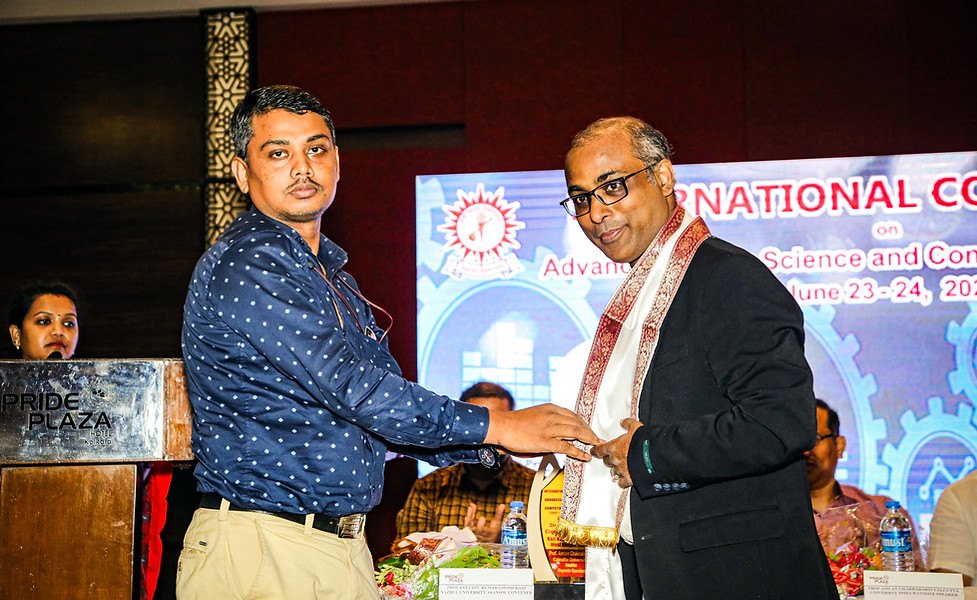
The Ashram's Pillar for the Industrial Architecture
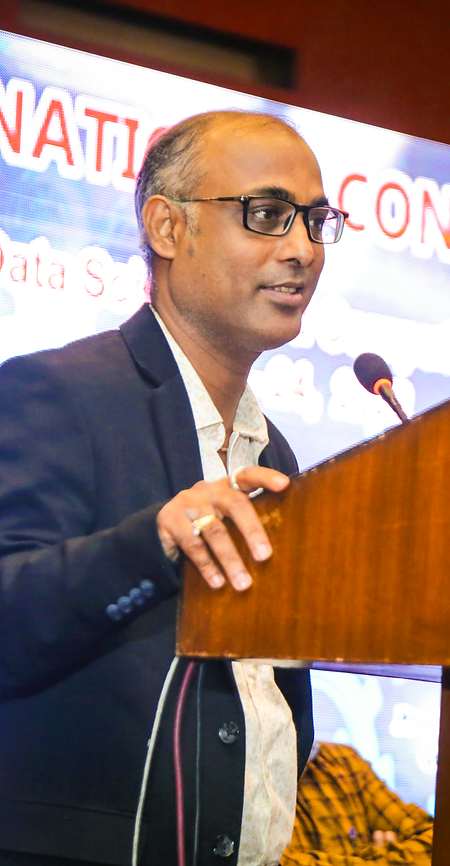
“My action will decide how nature will
return to me.”
Embedding a genuine ethical framework into the core of an industrial enterprise is a significant challenge for any leader. It requires moving beyond compliance and corporate social responsibility into the realm of an operational philosophy. For Majumder, the solution was never in doubt. The principles for an ethical industry were the same as those for an ethical life, learned years earlier at the Ramakrishna Ashram. His model is a translation of this spiritual code into a secular, industrial doctrine built on three pillars: a deep and abiding imperative to understand nature, a mandate to live one’s life properly, and a non-negotiable commitment to giving back to society. The foundation is an integrated system designed to ensure that industry serves human needs without violating the natural and social laws it depends on.
The framework’s power lies in rejecting the false conflict between progress and preservation. Central to this is the principle of understanding nature, which he reframes through the universal language of physics. He likens the relationship between industry and the environment to Newton’s third law. Every action precipitates an equal and opposite reaction. There is no mystical belief to him but a statement of pure, undeniable causality. Harming the environment is more than an ethical transgression. Majumder understands its violation as a logical error that invites a reciprocal and often uncontrollable reaction from the system. This perspective transforms sustainability from a moral preference into a pragmatic necessity. An engineer or a logician cannot deny the laws of physics. By grounding his argument here, Dr. Majumder makes his case in a language that the world of steel and logic must respect.
This understanding extends beyond the physical environment to the human one. An industry must comprehend the nature of its stakeholders, the "interested parties" impacted by its existence. The final two pillars, “living properly” and “giving back”, are the application of this understanding. "Living properly" becomes a principle of corporate integrity, demanding that an organization's actions align with its stated mission. "Giving back" transcends charity, becoming a strategic imperative to close the system’s loop and reinvest in the society that grants the industry its agency to operate. An industry, like the idols he saw conceived at the Ashram, must first be visualized in the mind. If that initial visualization lacks an ethical dimension, the resulting creation is flawed from its inception. His system is therefore a form of industrial design where the moral architecture is as critical as the physical infrastructure.


“My bank balance, when the day I die, has to be zero in cash.”
The Zero Cash Balance
A leader’s core conviction is rarely forged in a boardroom. It is often the product of a small, unexpected encounter that reorients their moral compass, turning a general philosophy into a non-negotiable personal mandate. For Majumder, this catalyst was not a crisis or a grand revelation, but a human act of kindness: after an exam, a stranger provided him two desperately needed rupees for a train ticket. He describes the aftermath as a profound emotional reaction, a form of "happiness that I need to give back to the city." This might have been an insignificant moment to many, but to Majumder, it served as the cornerstone for a meticulously engineered life of service. It was the moment an abstract spiritual value was rendered into a tangible debt that he had to repay, not with gratitude, but with a lifetime of structured action.
He architected a rational life strategy from this emotional turning point, a "75-Year Plan." The outline is clear: the first 25 years are for study, the next 25 are for earning a livelihood, and the final 25 are dedicated entirely to giving back to society. This concise and calculated framework allocates a finite resource, one's life, with the precision of an engineer. His decision to leave a lucrative industrial career was not a midlife crisis or a change of heart. It was the deliberate initiation of the final, most crucial phase of his life's mission, a mission for which his career prepared him. This structured approach starkly contrasts the modern ideal of an endlessly accumulating career. Majumder's life has a clear and finite purpose.
The plan culminates in a radical financial and philosophical doctrine: to "die zero." His stated goal is for his bank balance to be zero on the day he dies. This is his choice of rejecting materialism. He explains this concept with an analogy of a glass: one can fill it with the "water" of material wealth or the "oil" of happiness and peace. His objective is to completely replace one with the other, to achieve a state of ultimate peace. This "die zero" principle is the engine that powers his ethical system. It reveals that his professional advocacy for corporate responsibility is more than a sound business strategy. It is the direct extension of his personal, uncompromising code of conduct forged from a single, transformative act of grace.

Uprooting Conformity
The modern development model is a story of centralization, pulling human capital from the periphery into dense urban cores under the promise of opportunity. Majumder’s philosophy presents a radical counter-narrative. He argues that this mass migration is not a sign of progress but an ecological error. His definition of "nature" extends beyond the physical landscape of trees and rivers to encompass "human nature" itself, a delicate ecosystem of skills, identity, and culture intrinsically tied to a specific geography. For him, the character of a person is inseparable from the place where they take part. Uprooting them is an act of systemic disruption that severs an individual from the source of their being.
This perspective recasts sustainability as a project of preserving human ecosystems. A farmer brought to the city loses his agricultural skill set, just as an industrial worker sent to a village is rendered ineffective. The error, Majumder posits, lies in viewing people as interchangeable labor units rather than highly specialized products of their environment. The fine art of Dokra casting in one region or the mask-making in another is more than a craft, as it manifests a community's unique "beautiful nature," a form of cultural biodiversity that is as valuable and fragile as any species in a rainforest. When these place-based skills are lost, the entire system is impoverished. Development cannot be built on the foundation of cultural erasure.
Majumder’s solution, therefore, is not to halt development but to reverse its gravitational pull. Instead of moving people to technology, he argues for distributing technology to the people. Bringing universities, communication infrastructure, and industrial opportunities to rural areas allows communities to develop without sacrificing their intrinsic nature. This model of decentralized progress fosters resilience by strengthening local identities and economies, rather than creating an over-reliance on a few overcrowded and disconnected urban centers. It is a vision where progress does not demand assimilation into a homogenous culture. Sustainability, in this framework, becomes an act of honoring and empowering the unique human ecologies that constitute a nation, ensuring that development enriches, not erases, the geographies of being. The question remains: whose nature is disrupted to bring these opportunities to the periphery of cultural diversity?

“The nature of the human being comes from the place where it takes part. So that is why you should not disturb nature also.”
The Burden of Choice
Praising theoretical knowledge often creates a deep chasm between those who study a system and those who operate within it. Majumder diagnoses this gap between academia and industry not as a simple misalignment, but as a fundamental failure of an understanding rooted in abstraction. He argues that many academics, brilliant in their domain, are like “people who can write doctoral theses on the physics of swimming but have never entered the water”. Their knowledge, while vast, lacks the crucial dimension that only direct experience can provide. This is no simple skill gap. It is a failure of empathy, a disconnect born from the ego that believes a system can be mastered from above.
This critique is crystallized in his "driver’s seat" doctrine. Proper understanding, he posits, is the exclusive domain of the person in the driver's seat. Only the driver feels the road's vibrations, anticipates the risks, and is directly responsible for the journey's outcome. The passenger in the back seat can observe, comment, and critique, but they will never comprehend the pain or happiness of the one at the steering wheel. For Majumder, academics without industry experience are perpetual passengers. They lack the credibility that comes from consequence, and industry leaders instinctively recognize this, raising the barrier of mutual distrust.
His proposed solution is therefore not a new curriculum, but a structural bridge designed to force these two worlds to merge. He advocates for a mandatory, two-way exchange: industry leaders must return to the university to engage with new theories, and professors must spend years working within industry to ground their research in reality. The "professor of practice" model is the institutional embodiment of this philosophy. It is a mechanism to ensure that knowledge is not merely abstract but applied, relevant, and tested by experience. This final bridge is the capstone of his life’s work. It is the practical method for creating leaders who, like him, can reconcile the world of ideas with the world of action. What are the unseen costs of imposing a perfect solution on the imperfect realities of human careers and institutional inertia?
“But if you sit in the backseat. How do you understand the pain or the happiness of a driver?”

What I learned from Dr. Arghya Majumder
-
A Personal Code Must Precede a Professional One: An effective ethical framework for an organization is not a corporate accessory. It is the direct extension of a leader's deeply held, non-negotiable personal philosophy.
-
True Purpose Can Be Architected: A single, transformative personal experience can be rationally engineered into a lifelong strategy. His "75-Year Plan" demonstrates that a life of service is not a vague hope but a project that can be designed and executed precisely.
-
Culture is an Ecosystem, Not a Resource: Sustainability extends beyond the natural environment to "human nature." Uprooting people from their geographic and cultural origins is an ecological error that destroys irreplaceable, specialized skills and weakens the entire system.
-
Knowledge Without Consequence is a Liability: True understanding is the exclusive domain of the person in the "driver's seat." Theoretical knowledge is hollow without the credibility that only comes from direct experience and bearing the responsibility for outcomes.
-
The Idealist's Burden is the Gap Between Vision and Reality: A leader’s most profound challenge lies in translating a perfect personal or theoretical model into an imperfect, real-world system with its own inertia and incentives. The value is often in the vision, not the viability.
Comprehension Challenge: Dr. Arghya Majumder
Philosophy
Dr. Arghya Majumder’s philosophy is a masterclass in applying a personal ethical code to complex systems. Yet, his "driver's seat" doctrine reveals a critical tension: the profound gap between those with theoretical knowledge and those with practical experience. He argues for a "mandatory" bridge to close this gap, but as our analysis revealed, this idealistic solution clashes with the realities of corporate incentives and human careers. This challenge tests your ability to navigate this exact conflict.
The Scenario
Imagine 'Alia,' the brilliant and idealistic Head of R&D at a leading Indian automotive technology company. Inspired by Majumder's philosophy, she is convinced that the company's innovation is stagnating because its top engineers (the "theorists") are disconnected from the mechanics on the factory floor (the "drivers"). She proposes a radical new program: for six months, every senior R&D engineer must work a rotation on the assembly and repair lines, and a cohort of the most skilled senior mechanics must be embedded within the R&D teams.
The COO, 'Rohan,' is a pragmatic veteran focused on efficiency and quarterly results. He argues Alia’s plan is a logistical nightmare. It will take his best engineers offline, slowing down critical projects, and create friction by inserting mechanics into a highly specialized R&D environment. He sees it as a costly, disruptive, and unproven experiment with no clear ROI. He believes engineers should engineer and mechanics should build, and that the current system, while imperfect, is profitable and predictable. Alia has one final meeting to convince Rohan.

The Task
Drawing on the core tensions in Majumder’s philosophy, what is Alia’s imperative?
-
How can she frame her "idealistic" proposal not as a philosophical luxury, but as a pragmatic, long-term strategic necessity for the business?
-
How does she address Rohan's valid concerns about short-term disruption and cost, using the logic of the "driver's seat" doctrine?
-
Develop a strategic argument for Alia that bridges her noble vision with the COO's operational reality. How do you build a bridge between two worlds when one side sees it as a threat to its very existence?