

Air
The professional landscape of corporate sustainability is often a misleading world of abstraction. It is a domain of ambitious targets set by global agents and detailed in reports crafted by large consulting agencies. Language is one of the frameworks, metrics, and long-term roadmaps that will help achieve goals decades ahead. Within this theater, Twinkle Manglani has defined her role as an executor. Her work begins where the reports end, translating paper-based goals into on-ground implementation. It is a pragmatic, technical, and objective-driven mandate.
Yet, the origin of this operational doctrine is neither technical nor objective. It is rooted in a personal and visceral reality. Growing up, Manglani was a "sick kid," engaged in constant battles with severe asthma and skin allergies that defined her childhood not with play, but with hospital visits and medication. She recalls the "suffocating feeling, the fear of not being able to catch my breath". For her, the atmospheric health was never reduced to a scientific concept. It was a "matter of survival".
This lived experience is the source code for her professional philosophy. Her career is a direct extension of that childhood battle. It is a conscious attempt to "be a part of the solution, and to clean up the air I had spent my childhood fighting to breathe". This foundation transforms her work from a business service into an intimate mandate. Her pragmatism is not just a professional preference. It is the necessary consequence of a life where environmental failure had terminal implications. What operational doctrine emerges when a leader’s motivation is not rooted in market opportunity but the non-negotiable reality of human vulnerability?

"Choosing the career path of sustainability wasn't a random career choice, it was very personal to me."

Tangible Change
Twinkle Manglani’s doctrine begins with a strategic distinction. She positions her company not as a creator of grand strategy but as a dedicated "execution partner". This role directly responds to a systemic failure point she identified in the corporate sustainability landscape. Large consulting firms often craft ambitious targets for global corporations, resulting in comprehensive reports that sound “wonderful on paper”. These documents provide a necessary architectural vision. However, Manglani emphasizes that a blueprint is not a building. The critical point of failure is the translation of these theoretical documents into on-ground operational reality. Her methodology, instead, is an architecture designed to bridge this chasm between abstract goals and tangible progress.
This approach exceeds the philosophy of how to conduct project management. It is a rejection of inherited assumptions. When a client presents a report from another agency, Manglani’s team does not take it at face value but conducts its own "in-depth analysis". This is a non-negotiable first principle. They scrutinize everything from the client's electricity load patterns to the potential renewable energy sources available in different implementation modes. Only after rigorous, independent vetting do they recommend solutions that can be implemented. This methodical approach is a direct countermeasure to the risk of beautifully designed but hollow attempts. For a leader whose foundational experience is rooted in a non-negotiable need for a tangible outcome, an unimplemented plan is a failure of purpose.
Her pragmatism extends to how she communicates the path forward. She avoids overwhelming ten-point checklists that result in partial adoption. Instead, she frames implementation as a "step-by-step journey". The first objective is identifying the "low-hanging fruit," the initial, achievable wins that build momentum and demonstrate immediate value. This is a deliberate strategy to build a resilient foundation for change. It directly addresses corporate inertia by providing proof of concept before requesting a leap of faith. She clarifies to clients that one cannot "reach a hundredth step before ensuring that we... have reached there one by one". This doctrine requires an executor who understands that a successful long-term transformation is not a single, monolithic act. It is a sequence of small, well-executed victories that accumulate into an irreversible shift. This methodology is the logical consequence of a life spent where abstract promises were worthless and only tangible progress mattered for survival.

"We believe in making it a reality of what's been put in reports."
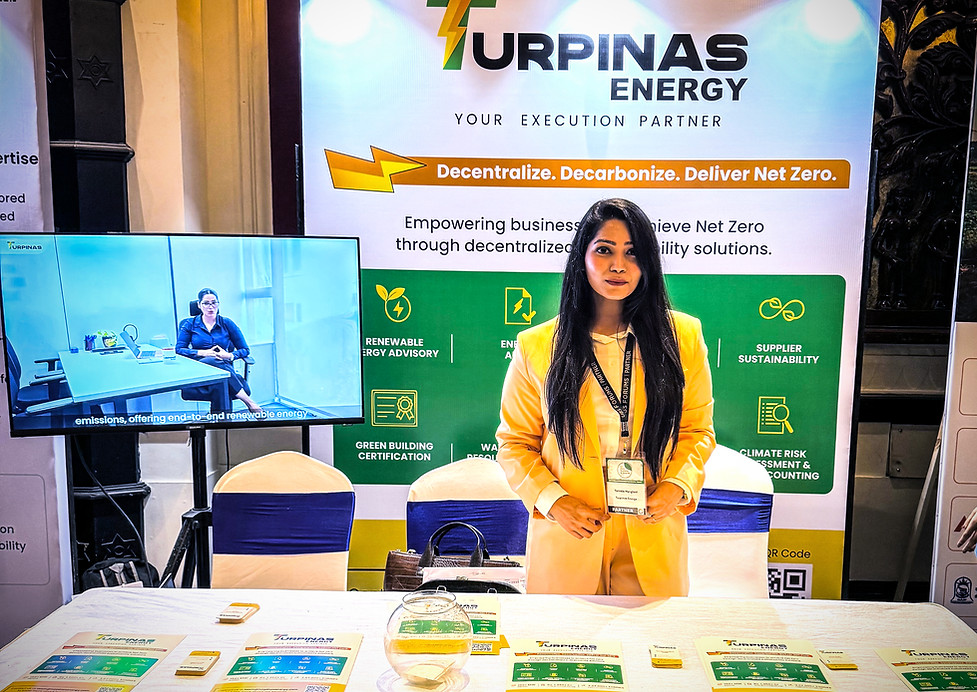

"The regulations are changing in a snap."
Perpetual Change
The renewable energy sector in India is unpredictable. It is a landscape defined by volatility. The primary source of this turbulence is not technological or market-driven, but political. The industry is "regulatory driven," operating within a framework where the rules change and laws can be rewritten quickly. Manglani describes a system where "the regulations are changing in a snap". This condition of constant change dictates the necessary traits of any effective operator. It demands a model built not for stability, but for reaction, if not proaction. Agility ceases to be a preference. It becomes a prerequisite for survival.
This imperative explains the logic behind one of Manglani’s defining early contracts. A major client selected her to establish their renewable energy roadmap when she was a "one-person team". The decision to bypass larger, more established firms was strategic. In a volatile environment, the internal friction of a large organization can be a liability. The time required for multi-departmental alignment becomes a fatal delay when the ground rules shift overnight. Manglani's structure, free from such friction, offered a decisive advantage. Her ability to adapt was not a feature of her business. At that point, it was the core product. A large corporation, aware of its own structural inertia, was effectively outsourcing its need for agility to an entity designed for it.
This agility builds on speed but is also a form of strategic adaptation where the operator's structure must mirror the environment's character. A fluid, unpredictable system requires a fluid, unburdened agent to navigate it successfully. Large corporations, built for scale and predictability, are poorly designed for this habitat. Their strength in a stable market becomes a weakness in a volatile one. Manglani's model is effective because its design is a direct response to the conditions of its environment. She chose to be agile because the system she operates within left no other viable choice for an executor focused on tangible outcomes. Her approach is the consequence of an empirical assessment of the operational reality. The doctrine of execution is predicated on this structural fitness. A partner who cannot keep pace with the chaotic landscape is no partner at all, and at worst, another liability. Manglani’s business model is a clear example of form following function, where the function of execution dictates the form of her company within a system defined by perpetual change.

The Indian Grit
While transitioning to renewable energy is often presented as a straightforward, cost-effective choice for corporations, Manglani’s work reveals a more complex reality. Achieving ambitious targets like RE100 is not a procurement decision. It is an engagement with rudimentary systemic challenges. She identifies a fundamental conflict: the state-owned distribution companies view corporate shifts to independent renewable power as a direct "revenue loss". This creates a political barrier. These entities erect "regulatory constraints" to protect their legacy models, making a complete transition to renewables difficult. The problem is not just one of corporate will but of entrenched political and economic interests. A core technical challenge compounds this internal friction. Renewable sources like solar and wind are "very intermittent in nature". Manglani explains that injecting high volumes of this fluctuating power into the national infrastructure "causes the instability of the grid". This technical reality makes advanced technologies like Battery Energy Storage Solutions (BESS) a non-negotiable component of a functioning renewable grid. Storage is not an accessory. It is the enabling technology required to support the grid during "non-solar hours" and to balance the intermittency that threatens the system. The path to a green grid depends on a technological leap that solves the inconsistency problem.
This interplay of domestic policy and technical necessity is further shaped by geopolitics. Manglani’s perspective is grounded in a pragmatic doctrine of protectionism. She asserts that "every country, every government needs to safeguard its own industry". She views policies that protect domestic manufacturing not as trade barriers, but as essential acts of building national resilience. She cites India’s "conscious call" to impose duties on Chinese solar panels as a necessary step to motivate and "support Indian manufacturers". This directly responds to China's long-term strategy of using economies of scale and state support to become a "behemoth" in the solar industry. This dynamic reveals that the energy transition is also a theater of industrial strategy, where nations compete to control the foundational technologies of the future economy. Developing India’s domestic capacity is an economic goal and an act of securing its sovereignty, ensuring it is not dependent on a geopolitical rival for the infrastructure of its future energy. Manglani’s work as an executor requires her to navigate these intersecting layers of technology, domestic policy, and international strategy, proving that implementing a single solar project is an act that reverberates through the geopolitical landscape.

"Every country, every government needs to safeguard its own industry."
The Corporate Pullup
Human beings navigate the technical and political complexities of the renewable energy sector, and every operational doctrine has a personal source code. For Manglani, this code was written in the male-dominated arena of India's energy and infrastructure industries. She speaks of facing "so many instances when I would lose networks, businesses, because of the gender bias". This is not an abstract philosophical social issue but a direct impediment with tangible commercial consequences. Manglani did not accept the existing structure. Instead, she began the work of re-engineering it. Her stated goal became to "make space for women in this industry," an act of architectural change designed to alter the system from within. This endeavor became an integral objective of her commercial goals.
This personal mission is built on a doctrine of collective ascent. Manglani’s assertion that "we can only go far if we go it together" directly rejects the zero-sum, individualistic model of success that can define competitive industries. It is a philosophy of shared progress. She describes a commitment to succeeding herself and actively "pulling them up," referring to other women seeking a foothold in the sector. This includes mentorship and a long-term strategy for systemic change. By fostering a network of capable women, she works to change the composition of the industry itself, making it more representative and resilient. Her own difficult entry into the field became the catalyst for building a more accessible path for others. It is a pragmatic approach to creating the professional environment she believes should exist.
This same unwavering core informs her professional pragmatism. It is visible in the micro-behaviors that reveal a macro-philosophy. She notes, "I am not the kind of person who would leave the room without, you know, switching off the light". This small act of personal discipline indicates a deep-seated sense of responsibility and an aversion to waste. This is the same source code that writes her professional demand for efficiency, tangible results, and not wasting a client's time or capital on abstract reports that will never be implemented. Her personal ethos and her professional methodology are one. They are two expressions of the same underlying operating system. The technical, objective, and business-focused language she employs is the required tool to execute her deeply personal mission. She has translated her subjective mandate into the objective language of business because it is the most effective language for creating tangible change in the corporate world.

"We can only go far if we go it together."

What I learned from Twinkle Manglani
-
Personal Mandates Forge Pragmatic Doctrines: The most resilient professional philosophies are often not learned but lived. A non-negotiable personal stake in an outcome, like a literal fight for air, can be translated into a formidable and pragmatic business model.
-
Execution Begins by Rejecting Abstraction: A "wonderful on paper" plan is a liability until it is vetted against on-ground reality. Accurate execution demands independent analysis and a "step-by-step journey" that prioritizes tangible, immediate wins over grand, hollow strategies.
-
Agility is a Prerequisite for Survival, Not a Preference: In a volatile, "regulatory driven" environment, an organization's structure must mirror the system's instability. Agility is not a startup cliché; it is a necessary condition for any executor who intends to succeed.
-
The Energy Transition is a Theater of Industrial Strategy: Moving to renewable energy is not just an environmental goal. It is an act of securing national sovereignty, requiring a clear-eyed understanding of domestic politics, technical limitations, and the geopolitical competition for the foundational technologies of the future.
-
Systemic Change Requires Architectural Work: In a biased system, individual success is insufficient. A true leader must engage in "architectural change," deliberately re-engineering the environment to create space and opportunity for others through a doctrine of collective ascent.
Comprehension Challenge: Twinkle Manglani
Philosophy
Twinkle Manglani’s doctrine is a masterclass in translating abstract corporate ambition into on-ground reality. She rejects inherited assumptions, conducts rigorous analysis, and builds momentum through a pragmatic, step-by-step approach. This challenge tests your ability to deploy this executor's doctrine in a system paralyzed by the gap between a beautiful vision and a messy reality.
The Scenario
Imagine 'Priya,' the newly appointed Head of Sustainability for a large, family-run Indian textile conglomerate. The board, seeking to enhance its global image, has just approved a sweeping, multi-year sustainability roadmap designed by a prestigious European consulting firm. The plan is ambitious. It mandates a 50% reduction in water usage and a shift to 100% renewable energy within three years, promising to make the company a global leader.
Priya quickly discovers a deep chasm between the report and reality. The factory managers view the water reduction targets as impossible without crippling production. The local grid is notoriously unreliable, making a full shift to renewables seem like a fantasy. The company's culture is deeply resistant to the kind of rapid, top-down change the European firm's roadmap demands. The board sees a beautiful plan. Priya sees a blueprint for failure.
The COO, 'Rohan,' is a pragmatic veteran focused on efficiency and quarterly results. He argues Alia’s plan is a logistical nightmare. It will take his best engineers offline, slowing down critical projects, and create friction by inserting mechanics into a highly specialized R&D environment. He sees it as a costly, disruptive, and unproven experiment with no clear ROI. He believes engineers should engineer and mechanics should build, and that the current system, while imperfect, is profitable and predictable. Alia has one final meeting to convince Rohan.

The Task
Drawing on Twinkle Manglani’s philosophy, what is Priya’s imperative?
-
How can she reframe her role not as the implementer of a flawed plan, but as an "execution partner" who must first establish a realistic path forward?
-
What steps should she take to conduct her own "in-depth analysis" to create a new, viable roadmap, and how does she justify this costly and time-consuming duplication of effort to her board?
-
How can she identify the "low-hanging fruit" that will deliver immediate, tangible wins and build the trust and momentum needed to convince the skeptical factory managers?
-
Develop the strategic argument Priya should use to present her new, more pragmatic "step-by-step journey" to the board, framing it not as a rejection of their ambition, but as the only way to make that ambition a reality.